EP.30 / Alan Pullman
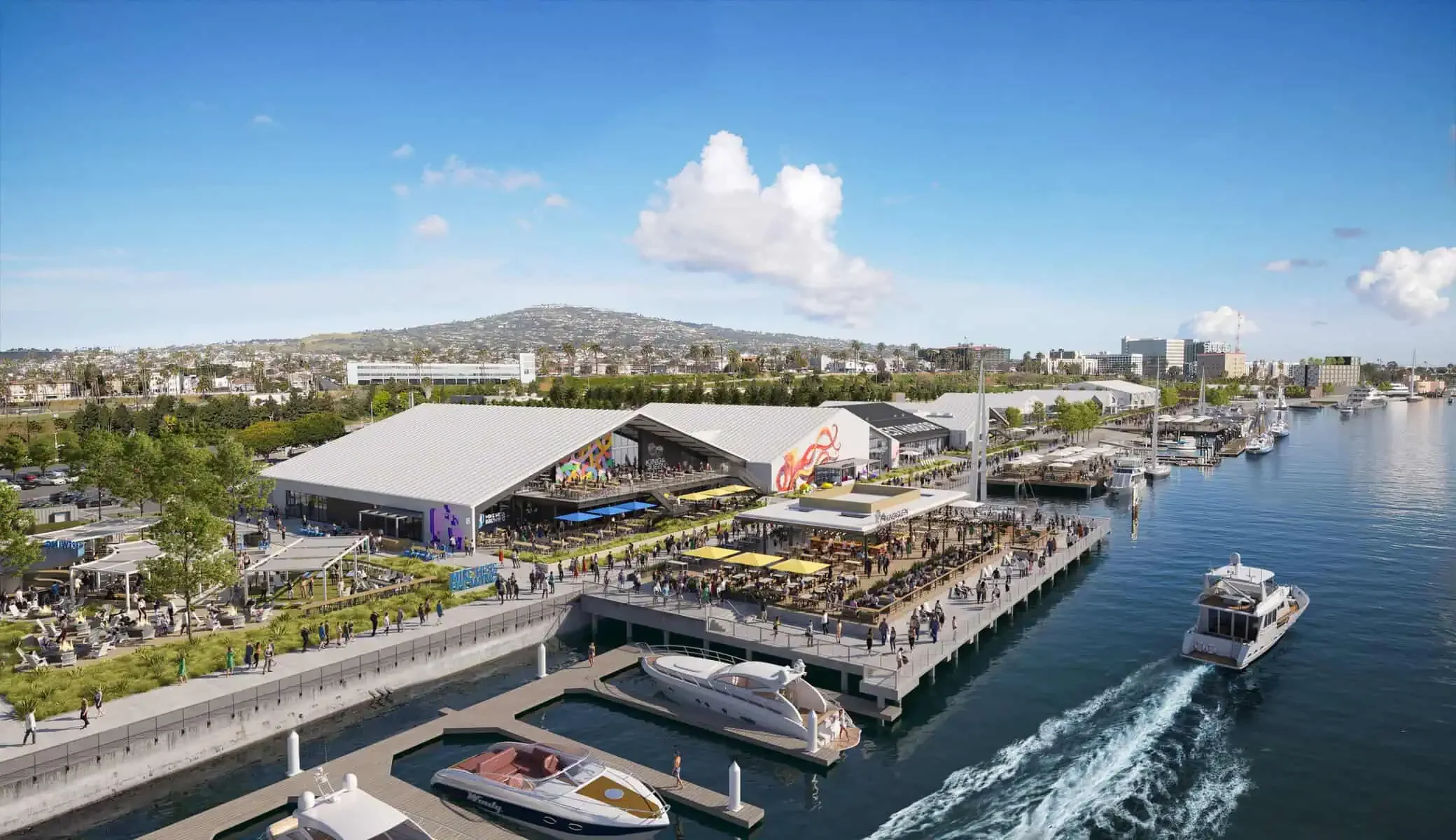
West Harbor, courtesy of Studio One Eleven.
What Does It Take to Make a More Livable LA?
Alan Pullman founded Studio One Eleven 25 years ago with a theory that ran against how most architecture firms operated: that the most important work in urban environments was not designing the next signature building, but the space in-between. His firm embraces the messiness of cities and finds opportunities in spaces large and small.
At the core of every Studio One Eleven project is a dedication to enhancing city life and a curiosity about its messiness. In our conversation, Alan shares how his team has been leading urban design on West Harbor — nearly a mile of waterfront now under construction — and working with LA Metro on strategies to transform Union Station from a pass-through into a destination.
In addition to walking us through large-scale projects, Alan also gets into the nuances of what it means to build a more liveable, equitable city. Plus, we talk about Long Beach versus Los Angeles as a place to build, Union Station's potential as a World Cup fan zone, and how Alan thinks the city's "hardware" (i.e. its physical spaces) can improve through better "software" like activation and programming.
Listen on Apple Podcasts | Spotify
About Alan Pullman, AIA
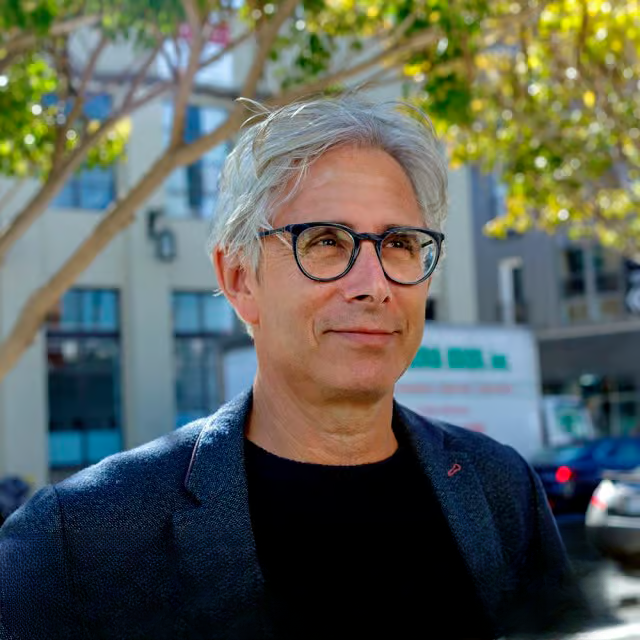
Alan Pullman is founder and senior principal at Studio One Eleven, leading the design and integration of the firm’s architecture and urban design work. He is a licensed architect with over 30 years’ experience working with cities, developers, and communities to enhance and improve the design and quality of the urban environment. Alan’s practice philosophy is rooted in a people-centric approach to city making. The impetus for Studio One Eleven was to create a practice devoted to local engagement with a commitment to collaborative solutions that address the multiple issues cities and their residents are facing in the 21st Century. Alan has led several planning and urban revitalization efforts including the Downtown Long Beach Visioning Process, Carson Street Mixed Use Master Plan, Reseda Rising Community Vision, Downtown Lomita Vision Plan, Westchester Business Improvement District Strategy and the Little Tokyo Transit Oriented Development Opportunity. Alan is currently is a director on the Downtown Long Beach Associates Board and serves on its Executive Committee, and is a member of the Urban Land Institute’s Urban Revitalization Council. A native of New York, Alan was awarded a Master of Science in Cities from The London School of Economics and Political Science, and a Bachelor of Architecture degree from Syracuse University.
Topics Covered
Reflecting on LA’s evolution over the past two decades
Tactical urbanism in practice: parklets, closing a street to traffic, and using downtown Long Beach as an urban lab
The core problem with how LA builds housing
Adaptive reuse and the Santa Ana Arts Collective
What makes an office-to-residential conversion work
The current status of West Harbor and the vision for the final build
The Bloc DTLA and what comes next after Macy's closing
The uncomfortable truth about neighborhood improvements in underserved areas
Hidden gems in LA
-
Sam Pepper 00:00
Alan, welcome to Building LA.
Alan Pullman 00:01
Thanks, Sam. It is great to be here. I'm very excited.
Sam Pepper 00:04
I am so excited you're here. When I was putting together the initial list of people that I wanted to interview on the podcast, when I first had this idea, a couple of years ago, you were one of the first names that I actually put on the list because of all the work that you've been doing that, I think, absolutely transcends what a typical architect or landscape architect or urbanist does. You're able to blend these things and to really just focus on what cities need, both large scale and small scale. And I think you have honed the craft in a way that few have, so I'm really excited that we're able to dive into your work and a little bit of your firm today. So the benefit of our listeners if you could just introduce yourself a little bit and your firm and then we'll dive into the rest
Alan Pullman 00:51
of the episode Sure. My name is Alan Pullman. I am the founder of studio 111 we're an architecture, urban design and landscape design firm, integrated practice. We started about 25 years ago here in downtown Long Beach, and our work is mostly regional, within the LA region.
Sam Pepper 01:13
So the first question I want to ask you is really about the genesis of the firm as it stands today, because you go on your website and you embrace this idea that cities are messy and that you enjoy that mess. And I'm curious about the genesis of the firm and what you were trying to create that maybe you didn't see in other practices in the area or in the country.
Alan Pullman 01:50
Well, when we started Sam was I started to think about a firm I wanted to create in the 90s. And if you think back to the 1990s in Los Angeles. It was the era of, I think John Gerty and the mall. There were really great cultural projects being done, but the region was still sprawling out, and there was a lot of new development on the fringes. It was also the era of redevelopment, where the model of working within the city was to assemble parcels, tear everything down, and attract a developer to build a bigger, newer project and all that. I'm not judging that, but I thought there was another way to really rebuild the city, repair the city, and I cared a lot about what was already here and making that better. So I thought there was a chance to really build a practice about repairing what we already had. I'm not from Los Angeles, I'm from New York, and I really loved what I saw about Los Angeles. I thought it could be better, as we all do, but I thought there was a really chance of building on what we already had versus building out or building new within the city. And that was really the genesis. I knew that there was money available for smaller, more incremental improvements to the city, storefront facade renovations of commercial buildings, streetscape improvements. I had seen that money out there, and I didn't think a lot of architects were chasing those kind of projects, architects that really cared and were great designers, and I thought that was the niche that we could start with.
Sam Pepper 03:40
Do you think that coming from New York helped inform that? Did you see an opportunity to celebrate the fact that it is this sort of adolescent city and to improve what you have versus I think there's a desire out there. Others have to sort of try and start things again in LA because they didn't feel like maybe the first go was sophisticated enough. Does that resonate at all with you?
Alan Pullman 04:03
I think it does. That's an interesting theory. I worked in New York. I worked in Manhattan for a few years, and it's a amazing city. I still love New York, but as a young architect, I could see it was a challenge to envision a career there without many, many, many years of working through the corporate offices, or I just didn't envision how I could build a career. And I thought I would try something new. I came to LA more on a lark than a real plan, but when I got here, I was a young architect, and I saw an adolescent city, as you say, with so much potential for improvement. We're in New York. The improvements are hard to make. New York is a we call it like a thick city, and Los Angeles was a thin city. So there's lots of spaces between things to do, do stuff that was just a great opportunity for young architect and for. If, soon as I got here, somebody said, you know, I want to build a new house. You know, any architects? I said, Well, I'm an architect. I technically wasn't an architect, and I got my first commission just at a dinner party. So that doesn't happen in New York. And I thought this might be a place to stick around and see how it pans out.
Sam Pepper 05:18
Yeah, there is, there is truth to the fact that I think there is a little bit more freedom, there's a little bit more flexibility, a little bit more opportunity for those starting out in LA versus New York, whereas there's you have to navigate the sort of the strata of society in New York, a little bit more. I certainly felt that as well. I moved in from New York.
Alan Pullman 05:39
It was even easier in the 90s, you would say it's I'm sure you agree. It's a little bit different.
Sam Pepper 05:45
Now, yes, I would agree with that. So the space in between buildings, your practice has done so many projects that are symptomatic of these smaller interventions that rejuvenate local neighborhood. Why do you think that other firms have not pursued that to the degree that you have? Because it seems, from a legibility standpoint, these products resonate with communities much more than an object of a building. It could be
Alan Pullman 06:17
somewhat architects training, because we are trained in certain ways to chase the iconic signature building object, as you say, which is how we're trained. And for some reason, myself and then the team that came and was interested in working with us were more interested in the impact the environment has on people versus the object itself. And we always talk about not the results or the process, but But what is the objective? What is the outcome we're trying to achieve for the community that has led us into lots of different avenues? I think it's fascinating. Maybe we have, like, a little bit of attention deficit, because we do lots of different things, but it all seems to coalesce to something that is fairly integrated in our practice and our approach. After we started with these small, very humble improvements to communities, it eventually grew into larger interventions, and we started to realize that we're not just trying to fix up streets or put a band aid on parts of city, but we're really thinking about city making, city repair in a deeper level. And when we started to build our firm, our approach was never the typologies that most architects will base their firm and their marketing on like we do, housing or office or workplace or education. It was more like the themes that we thought were important in the region to address, from making our city more livable, and those were housing for all, because housing has been and continues to be such a huge challenge for people living here, but it was also building community and place, and what that meant to really be of a place and of a community in our projects, and renewing the public realm. Because as we get denser, this might be a New York thing, but as we get denser, I think the public realm becomes more and more important than 21st Century mobility, because you really can't talk about Los Angeles without thinking about how we get around and how much that influences people's lives and the quality of life that you have in the city. The streetscape in much of La particularly on a cloudy day can be quite depressing in a lot of areas. And I certainly when, when folks visit me from New York or London or wherever, sometimes they're a little bit surprised going through parts of La about the lack of vitality on the street. And I think your firm is, is in these micro interventions, changing the narrative with these micro interventions. Have you seen, is there an example that you can speak to where it's sparked a larger rejuvenation of an area? Absolutely So, improving the immediate experience of a place, whether it's a safer sidewalk or more shade or better transit stops or more welcoming public spaces, it challenges people's assumptions about what the city is. It can efficiently and with low cost pilot new ideas, and those can influence others about how we make the city we can't redesign entire systems, but I think using pilots and what we call tactical urbanism, which are low cost, sometimes temporary improvements, they can incrementally make cities more humane and joyful. A lot of the work we've done around that. Has been in Long Beach. We've done that in other places too. We've worked with the Southern California Association of Governments in multiple cities on mobility, tactical improvements, but in Long Beach itself, especially downtown near our office, we use it as an urban lab, and we've tested out parklets. In fact, our firm was the first to actually bring parklets to Southern California. It was really piloted in San Francisco. We brought it here, and we did several parklets, which were about not only improving the outcomes for restaurants or businesses to have extra space, but they were really intentionally about street calming and place making on streets, and those led to further streetscape improvements. Those led to more bicycle lanes in our office. We took a street near our office, I should say we took a street and closed it to traffic and made it a promenade that's now like just today. Outside my office, there's a farmer's market, there's events, and we started ourselves starting to activate these spaces. Because I think when we think about the city today, so much of it is the hardware of the space, but it's also the software of what happens in the space. And I think cities really need to understand how to activate their places, especially in this time of post covid, when activation is really required.
Sam Pepper 11:26
I want to talk about your housing projects, because housing, affordable housing and market rate housing is obviously the big theme of real estate in the big political topic in the country, it's incredibly difficult to build housing with the economic environment, the regulatory environment in Southern California and across the country, and as a result, a it's very hard to actually build these projects, but when they are built, it's very hard to design them in the way that they are additive to the urban fabric. Certainly, you can put 100 units in there, 150 units, but designing a building that engages with the community is very, very difficult. You've been able to achieve that in many projects. How are you able to squeeze out great design on these shoestring budgets that I know, because they're all shoestring projects when it comes to housing.
Alan Pullman 12:27
I think you're right. It is hard to do. We have a couple of issues with the current like model of housing, right? So one is, we're building these new projects. People are taking larger commercial spaces or assembling parcels. We build a lot on parking lots, which is great, I think, but they're big sites, and we build big buildings that really are just, I hate to say it, but because of the economics, large boxes, often large stucco boxes, and there are a lot of units in them, 300 400 units sometimes. So I think there's this issue of scale. Do people like living in a building of that scale, and does that building fit into the context of the neighborhood in ways that we'd like to see our cities move towards? That's one issue. I think. The other issue is, who are we building for? So a lot of the projects we struggle with are they're built for a monoculture. They're mostly one bedrooms, maybe some two bedrooms, and some studios as a part of the mix, but it's mainly built for younger professionals. And I'm talking about market rate at the moment, younger professionals who are renting, because we're not building for sale. So when you have that project built for younger professionals, and it's mostly one bedrooms, people will live there, maybe happily for years. But can they build their whole life in that community, or is it a transient place? I've seen a lot of places build housing densely, but we've created a somewhat of a transient population that's not really vested in that community, and it's just a way stop for their next place.
Alan Pullman 14:13
So are we building community with the people in mind? And then where are we building? A lot of our buildings are on these commercial corridors, because that's where there's opportunity. You're not displacing existing housing. You're maybe using land that's obsolete for its its existing commercial or manufacturing use. But is that a great place to live? Because those our streets are built for moving cars and not for people living on them. So all those things contribute to what kind of housing are we building? What kind of communities are we creating? Another factor, I'm talking about all the things that we struggle with. But another factor is that, because you're building these large projects that are not necessarily easy to connect to the community, you put a lot of amenities into the project. Project. The developers have amazing amenities in a lot of these projects, but that I'm starting to see is starting to create a place where the city is not the amenity anymore. There's a beautiful gym, so you don't need to go to the Y or the park to play. There's a beautiful courtyard, there's a pool, so you don't have to go and to use the public pool. So you're actually creating this bit of a suburban urban experience where you're not really a part of the city. And those are all challenges we tried to address in our projects.
Alan Pullman 15:31
We had a client come to us in downtown, Long Beach with a large piece of parking lot, it was hundreds of cars, and wanted us to work on his project. And I asked him, What would you like to build? And he told us it would be this big wrap project. And as you know, a wrap is like a big parking garage surrounded by housing. And we just said no several times. And he finally came back and said, What would you like to build? And I had my designers come up with some ideas. I said, I'll let you know. And we came up with the idea of, well, you need to do a certain amount of parking. It had to do with replacing the existing parking and parking the new residents. So our idea was to build one centralized garage, a fairly large garage, but tall, nine stories in one corner of the site, take the rest of site and put buildings on grade with spaces in between it, and break them up so that instead of one large wrap building, we built a complex of five buildings on the site, and they sat on the ground. And the other advantage for him, the advantage was it was a very efficient way to build the garage. The advantage for us is that we saw is that the parking is in one corner and the housing spread out, so people would actually have to walk from their parking to their house, and they would actually meet each other, not in a corridor, but out on this streetscape that we created so there would be a way of interacting with your neighbors. And when we proposed it to the client. His comment was like, oh, like a city, like people have to walk. And I said, Yeah, pretend it's a city, and I think it's being built right now, so it will be fairly successful.
Sam Pepper 17:13
I was wondering where that story ended, because these projects are very hard to pencil, and I can see maybe that being a little bit more expensive potentially. Let's assume it was a little bit more expensive. How are you able to justify to the developer that it was worth it?
Alan Pullman 17:28
I think we can make the economic argument that centralizing this garage in one place would be easy to build and have some sort of savings for them and minimize the amount of parking that had to go underground. Now, there were other things we wanted them to do as well, to talk about creating community, and we broke the building down into five buildings. And so instead of a building of 600 units, there's five buildings. Each one is 150 which felt like it's more of a village, right? You live in this building, you might get to know the neighbors in that building and have a sense of community, but then some shared amenities throughout all the buildings as well, and we gave each building its own architectural facade, so that there was a sense of differentiation and place making in that which they like, they said, Oh, you've designed like a Danish village idea. And that was a big compliment to me. But there were things that we really wanted to do that we didn't get, such as having some townhomes for sale that would then introduce people living there, or maybe taking one of the buildings and making a senior housing component, so that would be different age groups, rather than everyone being a young professional moving in and moving out, but people would have a reason to stay there and invest in the place even longer. We didn't get any of those things. It's still fairly a monoculture, and even though the buildings have different facades and it feels like there's variety. All the units are generally the same, so we're getting there slowly, but it was not quite we didn't get everything we wanted, but the client, I think, seems to be happy with the project, and we'll see how it all works out. It'll be done this year, but I do think it was pushing a new model on them.
Sam Pepper 19:22
What's the name of the project?
Alan Pullman 19:24
It's called Alex in Long Beach, and it's Trammell Crow residential.
Sam Pepper 19:29
Trammel Crow guys.
Alan Pullman 19:30
Yeah, that was one project, but other projects generally deal with a lot of our projects have been adaptive reuse. We did a fantastic project in Santa Ana, and this was led by my partner, Michael Bond, where we took an old bank building and turned it into affordable artist housing called Santa Ana arts community. And it is, I think, the idea of new construction existing construction, reusing and old building. It was a 1960s office building, creating that sense of place, reusing what was there already doing it in a fairly efficient way. I do think that there's something about that that is quite exceptional when you can reuse a building or a part of a building, and you bring some of the history to the site, and everything is not all brand new. It brings a Tina a grain to the project. So I think it's really important for us. It's not just the numbers. It's about how do you experience living in this place and put yourself in it? And we use tools to do that. We model everything and put it on the VR goggles and walk through it with our clients and really care about what the experience of a human is, whereas it takes a bit of work to get around well, we need this yield, and we can only afford this much enhanced materials. But I do think that a lot of clients are interested in that if you can make the argument that you will have people extend their stay, less vacancy for affordable housing. The argument is always this little bit extra will make people care about the place, and you want them to care about the place because you want them to take care of it as much as possible.
Sam Pepper 21:16
You talked about the office to resi and I know it's a big part of the firm's thinking, and you have actually achieved what a lot of people talk about and discuss, which is converting office to residential. And you've done it more than once. One project that I was kind of interested in is 200 West Ocean, I think is the name of it, and that was an old office power that was converted into really nice looking residential building. Talk to us about the challenges you have, because there is some validity, I think, to people saying, oh, that's going to be tough, to how you made it happen, and to convince, obviously, the money behind the project to do it.
Alan Pullman 22:01
It is hard. I mean, it's economically difficult. So you have to, developer needs to buy it at the right basis point, right? And I can't tell you what that number is right now, but we know that it has to be at a certain point where you can afford to make the upgrades that are required. The structural upgrades are really a challenge. If you have to upgrade the entire building to the new code. So some of the new adaptive reuse ordinances that give some flexibility of that are going to help make it more affordable to do that particular building was a 1960s building, so we did have to upgrade the structure, but it was a fairly easy upgrade, and it was a fairly thin floor plate. Didn't have a center core. The cores were on the edges, which gave us a lot of flexibility. One of the biggest problems, especially as you get into newer buildings, is the floor plate size and depth. So navigating how to make the spaces usable, really is a challenge, and every building is different, so you have to understand that one of the interesting projects, again, Michael, my partner, is working on most intently, but I think it's fascinating, is a more, newer office building with a large floor plate that we're looking to convert into student housing, where we're putting the rooms around the edge, but student housing has a high demand for amenity spaces and study rooms and even potential other uses that could be buried within the building. And that's a great potential, I think, different kind of use for office to residential.
Sam Pepper 23:39
You're working on that one currently. So there's other projects still in the office that are these conversions.
Alan Pullman 23:45
We have one adaptive reuse, very similar to the one you talked about 200 ocean which we're currently working on, also in Downtown Long Beach. And the other one is a more conventional office building in a slightly more suburban area, but near one of the Cal States, so that, to us, does give a lot of potential for maybe other kind of uses. Dormitory style housing doesn't have to be your traditional one and two bedroom housing necessarily, but I think there's so much office vacancy, it'll be amazing to see how many of these projects can actually pencil out and move towards residential. It begs the question, how many should be converted?
Sam Pepper 24:26
There's a few projects that you're working on now that are large scale and will have sizable impacts on their area, maybe even the region. One is the West harbor redevelopment in Long Beach. There's a project that you worked on previously The Block in downtown LA that I know we wanted to chat about Union Station as well. So starting with West Harbor, which is an incredibly exciting project with rakovich and Jericho, I know that's under. Instruction. Now, you've been involved in that project for a long time, talk a little bit about that project and sort of its aspiration, and what I think everyone's excited about it. So I'm curious, kind of, what your maybe a little bit of the design, and how you approach that project, and say, the lessons that you took from some of the smaller interventions you've done on over the years.
Alan Pullman 25:21
Yeah, that's been an ongoing project that we've been involved in for quite a while, and it is with the radical rich company. I would say that in our evolution as a firm, we've made leaps with connecting with the right kind of clients. And I would say the biggest one was our connection with Wayne rakovich, who was really, I think, a Titan, kind of a client for us, a real mentor for me, because he really understood development, but he cared deeply about cities and wanted to do well by doing good, you can't ask for a better client than that. We worked originally with him out in the Alhambra, which is an office complex that he's been his firm has managed for many years, really interesting place. And then the block, and then West harbor was the last project he was developing before he unfortunately passed. But rakovich is still involved as a company, as well as Jericho, which is a local development company with deep, deep ties to San Pedro. So they both approached the project as this is City making it's not just development to return investment and with a deep care for the city of Los Angeles and the San Pedro community in particular. A lot of the planning was done by James Corner, who was out of London and their San Francisco office, who did a lot of the initial planning of the project for rakovich, and we got brought in to do the architecture. And also think about, how do you design the project when there are no tenants yet? How do you put the chicken in front of the egg and get tenants excited?
Alan Pullman 27:04
The idea of the project, and you as you know, it replaced a beloved place called Ports O’ Call, which is this cutesy and very, very much like seaside village, like a New England village, but it had become it had a lot of remediation issues, environmental issues, and the spaces were very small and hard to reconfigure, so it became obsolete in a certain way. So we wanted to avoid that by creating larger, more flexible spaces. And because of the soils, many other factors, and because we are in a working industrial port, we came up with the idea of these steel, prefabricated steel buildings, but we made sure that they were fairly generic in the way that we wanted the tenants to enliven them. We wanted the life to come from the tenants and the people occupying them. So they're fairly basic buildings, not as charming as ports of call, but in its own way, more flexible, so that you could subdivide them or find space for a very large tenant, which is happened, there's both small tenants moving in and larger tenants moving in. But it's also the spaces, the linkage of this beautiful new promenade on the water park spaces that are interspersed throughout the project, a large amphitheater that we're currently working on at the end of the project that'll bring 6500 people to events.
Alan Pullman 28:26
And working really hand in hand with the brokers to make sure that we could tell the story through visuals and walkthroughs and other tools to help tenants understand what could be there. Because it's hard to imagine. It's a hard site to get to. I mean, it has had the San Pedro Fish market for many years, and it's one of the most successful restaurants in the region. So there's a track record there of people coming, and they're staying, and they're going to be an anchor, but getting new tenants involved and interested was a bit of a challenge. But once you got momentum going, then it became an easier move to make.
Sam Pepper 29:05
It's pre leased?
Alan Pullman 29:06
Yeah, there are multiple phases. So phase one will open this summer. Phase two is being built, including a new park that will open a little later, but there'll be tenants moving in. And then there's a phase three, where San Pedro Fish Market will go. So it's a Phase project, because it's very larger. You're talking about almost a mile of waterfront, which is incredible. Where else in LA Do you have that opportunity, especially a window onto a working port? I'll tell you, when you're there and a cruise ship goes by, because the cruise terminal is right there, or a container ship comes by slowly with its tugboats. It's a pretty spectacular view. There's a theater of the port that this will be the stage to see it.
Sam Pepper 29:51
I think it's gonna be a tremendous success, because in the same way that Caruso's properties create an experience within a city. That is unique and sometimes kitschy, but in a really kind of amazing way. People want something that is very different from their day to day, where they feel like they're in an environment that's kind of immersive. And so this development located on a port where you do see sort of the hustle and bustle of ships coming in and out, it has a immediate sort of romanticism that's exciting. And then I think it's a phenomenal place to bring your family and children, the park obviously, I mean, James Corner has built some of the most beautiful parks over the past 20 years all around the world, so it's going to be a phenomenal success. And I hope that project becomes a template for other developments in Los Angeles and in Southern California. The other project you mentioned is The Block in Downtown LA, which I'm very familiar with, certainly gone to that Uniqlo a lot, and when I was working in downtown LA, it was around the corner. When we were talking earlier, you said you wanted to talk about, is there more work that's happening in the block? Is there a future phases to it?
Alan Pullman 31:06
Well, there are. It's great, because I think it's an interesting story about perseverance and the evolution of a project. I mean, I don't know if you remember what Macy's Plaza was. This is what the block was before became the blog. It was an enclosed mall that really cut itself. It was very 70s. It cut itself off from the city and created its own internal environment. And it fell into somewhat disrepair. It was dark and not very inviting. So it was a fairly ambitious plan by rakovich that we came up with. We ripped off the roof, we took down the gates, we opened it to the city. We also, with Metro, connected the project directly to the Seventh Street Metro station. There was a portal built when metro was built between the block and the Seventh Street Station, and it was closed. It was concreted over because, again, it was not a project that was connecting to the city, and we thought it'd be fantastic to open that up.
Alan Pullman 32:07
So that was one of the most interesting parts of the project. And now there's a direct connection to Metro, which happens you're from Europe, you go to any European station, and the stations are so connected into the city. There's no other project in Los Angeles that directly connects to a metro station. So that was interesting, but also is the story of challenges of retail, the office is actually doing fairly well. It's, I think, between 75 and 80% lease. The hotel, there's a Sheraton grand there that does very well, but there's changes going on. So as you know, the Macy's, Uniqlo seems to be doing great. There's a theater we put in the Alamo Drafthouse that does well. Joey's Downtown is one of my favorite downtown restaurants for the buzz of it and how fun it is.
Sam Pepper 32:57
Every time I go there, there's people from the industry there. I've honestly never been there, or I haven't known someone else at another table. It's a phenomenally easy place to go for a lunch, and it's reliable, and it always has a good atmosphere. So they've created a very successful little business there, right?
Alan Pullman 33:15
So now, though, Macy's is closed, which is just, again, a story of downtown. I mean, downtown was the location of all of our department stores now there are none, except for target and Macy's is closing. It has closed, and the NREA, which owns the block, has always owned it. They are rethinking how to use it. They're looking at tenants on the ground floor. But what's moving in and under construction now is a social club around racket sports called Ballers, and there's an amazing one in Philadelphia, but they'll be taking parts of the third floor as well as the roof of the garage. So this is what I'm so excited about. The roof of the garage is, like many places in Los Angeles, an underutilized resource. It's great for cars and has great feeling and vibe and views, but we just use it for parking, so half of that roof will be taken over by sports courts as well as a bar. And I think it is the evolution of these projects to experience and social interaction that's happening, which is, I guess, I think the direction of retail, and maybe even the direction, you know, of downtowns. What is it down to, if we're not going to have manufacturing and we're not going to have Office, really be the dominant economies of downtown? What is downtown for? And it seems like they're moving towards both residential neighborhoods as well as places that you go for culture, for events, for sports, and other things that really make you part of a community. So I think this is the evolution that's happening there.
Sam Pepper 34:56
Well, I also want to talk about Union Station, and I actually will. Forgive me, I don't know much about the development of Union Station, so if you could enlighten me and the listeners about what's going on there, I'd love to hear about it.
Alan Pullman 35:09
What we're doing right now is working with Union Station on strategies for us, start with Metro's goals, which are really to turn this into a destination in the city, many stations are amazing destinations within urban centers. I'll start with Grand Central Station, which is more than just a train station, and Union Station is a place right now where a lot of people just pass through, but it isn't in itself a destination. I think that's what Metro's goal are, to connect it to the community. So right now, we're just starting with helping with studying leasing options to lease some of the vacant space. And there's a new brewery going in, which is going to be really, really exciting, and that's the first tenant that's moving in. And then eventually we'll be looking at their food court and upgrading that as more of a destination. Rather than just a quick serve, there'll be a quick surf too, but but more of a destination within the space, and the ultimate goal is to really connect the station to the broader community and make it a place that people want to spend time. Because I think it's a beautiful building. It has amazing outdoor courtyards. It's really a phenomenal piece of urban architecture. We're also working with Union Station right now on how to program it as one of fifa's Fan zones during the upcoming World Cup. And actually, we're excited, because that's one area we're working on planning the World Cup fan zone. And West harbor is also going to be a World Cup fan zone.
Sam Pepper 36:41
I was going to say you have two of your your projects.
Alan Pullman 36:45
Yeah, that's exciting. And we're also working with the Southern California Association of Governments on community hubs throughout the region as community fan zones. And this is a larger idea of how to program some spaces to really create activation areas for people communities that wouldn't be directly able to go to one of these games, but also starting to seed the idea of how to activate our city again and reanimate our city again. So we're really excited about all of those projects. I think Union Station is something we're just starting with, but I've always been fascinated with that project and its potential in the city.
Sam Pepper 37:26
You've lived in, the LA region for a long time, and Long Beach being the place where you've established the firm you've grown, it gives it actually a different identity from some of the other firms that downtown LA or Santa Monica you've witnessed a lot of years in LA and how the development arc has gone. We're now in a period where LA, in the media, is seeing some challenges. We certainly had Covid, the fires. I'm curious what you're optimistic about in the greater Los Angeles area, and maybe also what concerns you going forwards, based on kind of what you've experienced over the years.
Alan Pullman 38:07
Maybe it was 2016 or 17, it was like peak LA, where everything was just coming up, and everything seemed possible, and we had huge investments in transit, which we're still making, but there was a hope that we were solving some of our major issues. I think there was a big setback in the city, in the region, because of covid and what it did to our local economies, in the sense that the office markets have fundamentally changed, and they were such a big part of our our downtowns. I think the other thing that's making it difficult is just how expensive it's become to live here. And when we first started out, a lot of that work that we started doing that repair of cities was in economically disadvantaged areas, and we felt really good about making improvements to those neighborhoods and doing infill projects and facade improvements and streetscape and park improvements.
Alan Pullman 39:09
But it's actually we're finding now that that's sort of shifted where those improvements are not necessarily wanted in those neighborhoods, because they can cause, I don't want to say gentrification, but they can cause the increase in rents because of better amenities, or bringing in higher income residents will disrupt the rent curve and start pushing rents up so it becomes much more difficult to build here. There was always NIMBYism, where people in wealthy areas didn't want new development, but that's also in areas, again, under resource areas where they don't want new development too, because it can disrupt the economies of those places. And there's also the challenge of, how do you pay for the infrastructure when you build? Because a lot of these communities we've. Studied this with civil engineers. They don't have the infrastructure to support it, whether it's the water pressure or the road network or the sewer network, so there's a cost there, and I think existing residents that want to pay for new residents to come in. And I understand that. I really understand, I also understand why people don't want nice new development near them if they're precarious and fighting to stay able to live in their community. They're very real challenges for development in this area. I don't think we have a cohesive ideology about how we want to build in Los Angeles.
Sam Pepper 40:37
No, there's a lot of distance between the ideology within the actual sort of real estate architecture community, I think there's a lot of different perspectives there. You then got a lot of distance between that group of perspectives. And then maybe what's going on in City Hall, certainly in Los Angeles, and then the general public, I think, has where the less day to day interest in real estate and what happens? But see the impacts of a development. And to your point, some are positive that someone can be very negative. Development needs just needs to be very thoughtful, and the community just has to be engaged in the process. But the venue in which that we often have that communication. I think that could be improved a lot, because I've heard this Long Beach is much more developer friendly than the city of Los Angeles and Santa Monica and some of the cities that are closer to downtown Lake. Is that true? Is that what your experience as well, that it's a more streamlined process, that it's a more developer friendly city, it's easier to get things done?
Alan Pullman 41:42
Well, it's a smaller city, so it's not the bureaucratic challenge of Los Angeles, which is really challenging to work through. And we even with affordable housing projects, we find it very difficult to work through the different departments and DWP and public works. Even though there's the talk about, let's streamline it, it's still anything but streamlined. I do think Long Beach is our experience has been that it is very pro housing as a city overall, and it is very, especially in the downtown and certain other areas, very open to new development. They did enact inclusionary housing requirement, which some people pushed against, saying it would totally stifle new development. But to be honest, that hasn't it's it's adjusted, and it new development continues on pace so as much as it can, with interest rates and other factors really limiting it, but I do think it is fairly pro development. We've experienced it that way. The challenges in Los Angeles, like fourth and central as an example, is a big project we were working on. We started working on this many years ago, and we were approached by a family that owned a cold storage facility, formerly a one of the city's train depot. So it was a large site.
Alan Pullman 43:05
It was an old facility. The infrastructure was old and inefficient, and the owners felt like rather than investing in upgrading the infrastructure for that the systems for that building, it would be better to redevelop it and find another location for their cold storage operation that was less expensive and easier access to freeways. And we thought, well, this is great. We can come up with a nice plan to densify this area. There was a downtime plan in the works to create more opportunities for housing and development, and we came up with the plan. We really thought was was a good one. Where it was, we talked about scale. It was like 11 separate buildings sitting on the ground, and each building we had different architects involved. Architect out of London, David Adjaye was part of it, and we felt like it was a really smart plan, and one that our client also understood as a smart business deal, because he could build it incrementally and at different timeframes as different markets emerged, and it gave him flexibility to build it that way. But what some of us thought was benefits others legitimately thought this is going to make it more expensive for us to live here, especially the Little Tokyo community. Now we're not in Little Tokyo, but we're near it, and they like the fact that there was a cold storage facility there that, not that they love that, but it really helped suppress desirability and rents. So they saw that as breaking the damn, so to speak. And I understand their point of view.
Sam Pepper 44:41
Yeah, similar things are happening in Chinatown as well. I mean, there's a lot of areas where there's a historic community that I think it's a catch 22 because these communities have such interesting character because of the fact they've had sort of a dominant minority culture as part of them, and so it makes them very appealing to go to, and Chinatown and Tokyo are certainly good examples of that. But as a result, investment does want to go into those areas, because they want to leverage the fact there is this interesting vibe, for lack of a better term and then, but you want to be careful to preserve what's there and the magic that was there and not destroy it. And I think a big example of this is Austin, Texas, which I think massively overdeveloped over the past decade. And certainly when I go back there now, I used to be in Austin all the time in 2010, 2011, 2012 and what made that city special is a lot less strong. It's still a great city, but its character was a lot more filtered now than it used to be. And I think preserving it is really got to be a big factor for these communities, and otherwise you're going to unintentionally destroy what makes them special.
Alan Pullman 45:53
Yeah. I mean, I think that Little Tokyo is one of my favorite neighborhoods in Los Angeles by far. I love being there. I love the real Tokyo too, but Little Tokyo is is fantastic, and it is protected in the new downtown plan in terms of scale. But what I think the challenge will be, whether Fourth and Central gets built or not, things are changing around it, and the challenge is it could end up being our Greenwich Village, where it doesn't change physically, but it becomes so the development pressures around it, it just upscales so much that it can't maintain the heritage businesses and the working class families, people that live there right now, and so that's really such a big challenge in a city like Los Angeles, but it is such a wonderful place, it's almost a victim of a success in a certain way.
Sam Pepper 46:47
I'm curious how you see the future of Studio One Eleven and where the firm is going. You've got the urban lab. You've got such an incredible spectrum of work, but that is inherently focused on cities and making cities more vibrant. The firm has got a lot of employees, got a lot of team members. Where do you see it going over the next 10 years?
Alan Pullman 47:12
The success of the firm is definitely the staff that the team that are here. They're just really very passionate about cities, very passionate about the work that they do, and I give all the credit to them. I'm really proud of their achievements. I think we continue with this idea of breaking down the barriers of what an architect does. Cities are challenging. There's political, financial, social issues that are involved in cities, and our goal is to be involved in it. That's why we say cities are messy, right? It's not that we love the mess. It's not that we actually love the mess, but we love getting into it. They're messy in that. I think Vishaan Chakrabarty talked about the messiness of working in cities, and we love that, mixing it up, and then we try to use because ultimately, at the heart we're designers, where can design be a leverage point to make the city better, more humane, more equitable, and really continue on that trajectory.
Alan Pullman 48:10
We've gotten more and more into mobility projects, whether it's helping the city of LA locate 3000 bus shelters, we're the urban design consultant on that. And that's an equity issue, because most bus riders are living in areas with very little shade, and it's only getting hotter. And so we're actually helping place those shelters. And we use design, it's not just an engineering issue, or where will it fit? But how will somebody experience it? What is it next to? How will you get to it? Those are the sort of perspectives we bring to the placement, because we're drawing every single bus shelter where it's going to go. And the goal is get 3000 back into the city. I think we're going to continue exploring what it means to make a better city, a more livable city, and whether that is continuing with the design of buildings, the urban design of streetscapes, or the activations that we're doing, especially in areas where we see the need to reprogram the city, reactivate the city, and just continue finding opportunities. We don't really believe in a plan, per se, but we do believe in looking out and seeing what's happening, understanding the trends and trying to react to them.
Sam Pepper 49:23
I'm a huge admirer of your firm, and I think I consider myself sort of a city nerd. I mean, I went into this business because I was growing up in London and was fascinated by why not some neighborhoods were more vibrant than others, and was curious about the zoning and the history and the parks and how the whole city was structured. Then lived in New York and was fascinated by that city and LA and greater LA area is is such an interesting canvas on which to work. And I love the fact that your firm, I think, is pursued this direction that is very different to a traditional architecture firm, and I think there's a lot to admire there, and I certainly hope for your continued success. And I think what you're doing is such a very visceral impact in a positive way on neighborhoods that is a great template for young firms that are coming in, firms that want to genuinely be improving cities. And I also hope that folks in power, whether it's developers or the billionaire class or certainly folks in City Hall, take note, because I think there's a lot that you're doing that there's so many ideas that on a large scale could really be transformative for a huge swath of this region. So the last question I have, what are your three favorite buildings or places in Greater Los Angeles?
Alan Pullman 50:53
Yeah, I knew this question was coming. Before I answer. I do want to say we're doing our own podcast. I was going to mention this earlier, called we've never done this before. It is launching next week, and it's really about a dive into each of our projects. So if somebody is interested in learning more about our projects, that would be the place find us on Spotify. As far as three places that I love, well, I would talk about cities as experience. So the ones that I'm thinking about Hollywood Bowl, like the experience of going to the Hollywood Bowl, it's just such an LA experience, and unique to LA. I love every time I go there. Think it's fantastic. I love what's happening around LACMA. I've always loved LA County Museum of Art, and even though I was a bit dubious of the new building and the need to tear down the old building and build the new one. I was there recently between The Page Museum and the new master plan for that, the renewed LACMA, the B cam, the Academy Award Museum, the Peterson across the street, the Arts and Crafts Museum across the street. We've created a whole cultural district, and I think that's great. I don't know if people totally understand what an amazing place that is, and I do love being there. Nothing is cohesive about it, and that's what makes it uniquely LA to me. But still, it's wonderful.
Sam Pepper 52:15
Oh, shout out to the Arts and Crafts Museum, which I think is definitely the hidden gem in that area. I think most people don't know about it, but it's fantastic.
Alan Pullman 52:23
Yeah, really great. It's hard to pick three places. La, so polycentric in so many different areas. I I just one thing I have always loved about LA is the food culture. I think the first week I got here, I went to get pupusas on Hoover, and it was mind blowing. So it's not really a place, but, and this is a tribute to Jonathan Gold, but it's more the mini malls of LA and the amazing food you can get from the Chinese food in San Marino to the barbecue in Koreatown to ramen in Little Tokyo. I just think we have an amazing food culture. It's like traveling the world, and it's great to experience it, and we can experience it so easily. So I couldn't give out a shout out to the mini malls of Los Angeles and and they're amazing restaurants, so surprising in so many ways, and so great.
Sam Pepper 53:15
I love it. I love it. It's a real pleasure and a real treat to talk to you. So thank you so much for the time.
Alan Pullman 53:21
Thank you, Sam, it's been great to talk to you.
Did you love this episode? Let us know by rating and reviewing our show on Apple Podcasts. It’s easy - simply click this link, click on Listen on Apple Podcasts, scroll to the bottom of the page, and select “Write a Review”. Let us know what you liked best about the episode, and what others can expect when they listen to our show.
While you’re at it, consider subscribing to Building LA. When you subscribe, you can guarantee you never miss a conversation with one our renowned designers, architects, and developers. Subscribe now!