EP.27 / Dan Meis
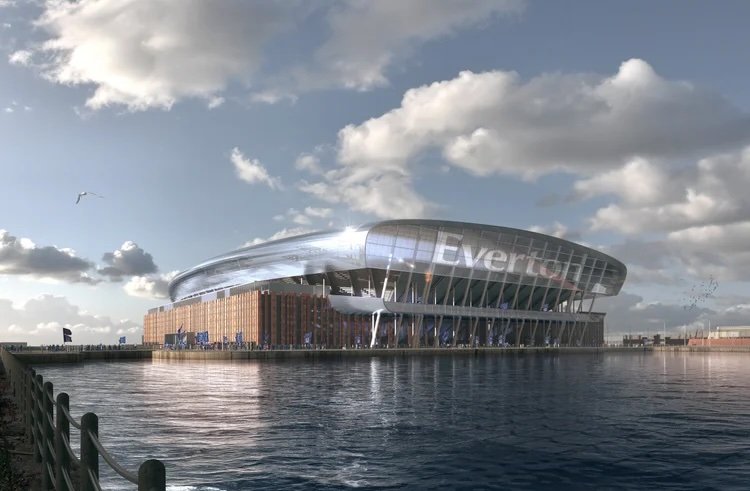
Hill Dickinson Stadium
Everton FC’s Hill Dickinson Stadium, The Staples Center, and Building For The Fan Base
Few architects ever achieve name recognition among the general public; fewer still become local heroes in northern English cities. Dan Meis, Managing/Design Partner at MEIS+ and SVP, Director of Global Sports Design at AECOM, is the exception. In this episode, I sit down with him to discuss the vision behind the new Everton football stadium and the unique challenge of designing venues that define entire cities.
We begin in an unlikely place: Kansas City, Missouri. Dan explains how a quirk of architectural history, specifically the separation of baseball and football stadiums in the 1970s, turned this midwestern city into the global epicenter of sports architecture.
But the heart of our conversation lies in Liverpool. Dan recounts his approach to the Everton project: Build a brick-and-steel bowl that honors the club's history. He also reflects on his unorthodox decision to engage directly with fans on social media, debating everything from seat capacity to sightlines—a gamble that ultimately paid off.
From there, we pivot to Los Angeles, where Dan shares the origin story of the Staples Center (now Crypto.com Arena). He reveals how a study of the Disneyland model, namely the strategy of keeping visitors engaged outside the main attractions, directly inspired the creation of LA Live and transformed a commuter city’s downtown into a destination.
Finally, we look at the future of Los Angeles. We touch on the tragedy of teams abandoning their home markets (in particular, The Chargers leaving San Diego) and discuss Dan’s vision for stadiums not just as a venue, but as public squares akin to the Palio di Siena.
Listen on Apple Podcasts | Spotify
About Dan Meis
Most recognized as the Designer of Los Angeles' Staples Center, Dan Meis, FAIA, is the Managing Partner of MEIS, a multi-discipline design practice based in New York City and Venice, CA. Dan graduated from the University of Illinois in 1985. As a designer in the Chicago office of Murphy/Jahn Architects, he worked on award-winning office towers in Chicago; New York; Germany; and South Africa.
In 1992, Dan became a Design Principal at the LA office of Ellerbe Becket, where he designed Europe's largest indoor arena - Nynex Arena in Manchester, England. In 1995, he won an international design competition for the $750 million Saitama Arena in Japan. This mixed-use structure is capable of mechanically transforming a 10,000-seat arena to a 35,000-seat stadium which hosts NFL exhibition games and Japan League Soccer. Later, as a Design Partner for NBBJ, Dan designed sports, entertainment, and convention facilities that were well-acclaimed and include the Dodge Theater in Phoenix, Miller Park in Milwaukee, Safeco Field in Seattle, Lincoln Financial in Philadelphia, and Paul Brown Stadium in Cincinnati. Paul Brown Stadium was the first NFL facility to ever win an AIA honor award. Dan's design for Los Angeles' Staples Center has won numerous awards and in 2001 he was featured in Time Magazine as one of their "100 Innovators in the World of Sports." He has twice been awarded the prestigious Business Week/Architectural Record Award, recognizing the value of design to a client's business. Dan’s work has been featured in numerous publications, and he is a frequent lecturer at architectural schools nationwide. He was twice selected as one of Sports Business Journal's "40 under 40" recognizing executives who have made the greatest impact in the sports industry. In 2006, he was elevated to the prestigious College of Fellows of the American Institute of Architects. He is currently leading a significant renovation of the Crypto.com Arena in Los Angeles as well as the design of the new Bramley Moore Stadium for Everton FC in Liverpool, UK. In 2018 he formed a partnership with tennis legend Maria Sharapova to develop prototype health and wellness performance centers world-wide.
In May of 2024, Dan joined AECOM as SVP, Director of Global Sports Design.
Topics Covered
Dan’s non-linear journey into Global Sports Design
Responding to the Everton FC design prompt and preserving the club's identity
The Staples Center and using the Disney model for LA Live
What Dan would change about the Staples Center today
The future of stadiums and optimism for LA
-
Sam Pepper 00:00
Dan Meis, it's a pleasure to have you on Building LA, thanks for joining.
Dan Meis 00:03
Thanks very much for having me. It's very exciting.
Sam Pepper 00:06
I wasn't aware of your work until I heard about the plans for the Everton Stadium in Liverpool a few years ago. It was while it was in development and the designs were being released, and everyone was getting quite excited about it and it and it was getting a lot of press because of its location on the Liverpool waterfront, which is obviously a UNESCO World Heritage Site. So we're going to talk a lot about stadiums, sports architecture, but I want to start with little bit of your background. My understanding is you grew up in a small town in Colorado, and have now made a really impressive name for yourself, and I think have actually become quite famous in parts of England for designing stadiums for thousands of people. How did that happen?
Dan Meis 00:53
Yeah, it's definitely not a linear journey, I would say. But there's a funny story in that my parents, when I was growing up, owned initially just a kind of corner bakery that later grew into a restaurant, a bakery in this little town that was kind of the public gathering spot everybody would come for their coffee and donuts in the morning, and because it was a place that everybody visited the town as it was growing, there was a new Kodak film plant that went into Windsor, and all of a sudden it was clear that this little town was going to grow, and one of the things they did is really increasing the tax revenue and allowing the town to build a new high school. And when that high school got designed, the architects decided to display the model of the High School in my parents' bakery, because everybody would come in and see it, and it was sort of a community asset in that way.
Dan Meis 01:45
And so I would go there in the mornings, before school and after, and I was just fascinated by the fact that this was somebody's job to build this little model of a building. And I would take the roof off, and you could look at it. And so that was my first sort of, and this was around 10 or 11. I thought, you know, that's really interesting. But at the time, I had this idea that you grow up to be an architect. It means you design houses. And my big ambition was to kind of be an architect in like Aspen or Vail and design cool houses in the mountains. So it was then sort of a weird turn. I went to Boulder for college to study what was then environmental design, and my roommate's father there met and said, Hey, if you really want to be an architect, you should come to Chicago, because that's where architecture in this country really grew up.
Dan Meis 02:33
And I went out for a summer and fell in love with the city, and then went to work for an architect named Helmut Jahn, and who was doing skyscrapers all over the world, and that's what really turned my understanding about what big architecture and architecture that affects cities and communities that was really compelling to me. And then one other slight turn is that later I was actually I moved to DC for a while to work with another firm, and a friend of mine from Murphy on called and said, Hey, I don't know if you would ever live in Kansas City, but there are this group of firms there that are doing all of the new stadiums. And this was in the mid 80s where there was all of a sudden, a huge boom. It started with arenas and baseball parks initially, and then the NFL kind of followed later. But almost every club, largely because of the revenues around broadcast and player salaries were rising, and it became really important for these buildings to be much bigger revenue generators. And so it's a whole separate quirk about why there were a few architects in Kansas City, Missouri.
Sam Pepper 03:32
Yeah, it's interesting. I wasn't aware of that. Who were the architects?
Dan Meis 03:33
It's funny. I was just telling this story. It started with the design of the Royals and Arrowhead Stadium. Prior to that, in the late 60s and early 70s, most of the new football baseball stadiums had been built were multi purpose, where it was thought that maybe you could do both sports in one building by shifting the lower decks in those seats. And we got these kind of donut stadiums. There was Veterans, there was Shea Stadium was like that. There were there were four or five of them. Riverfront in Cincinnati. Was another one. But what people quickly realized was that it was actually a compromise to both sports. It wasn't great for baseball and it wasn't great for football. And so Kansas City decided they were going to build a new sports complex, and they were going to do single purpose stadiums for both single purpose to baseball and single purpose to football, but in the same complex so they could share infrastructure and parking and everything.
Dan Meis 04:28
The firm that designed that stadium was it was actually a designer out of Denver whose name often gets lost in the shuffle of this, because he really did give those the kind of cool swoopy Jetson mid century modern look that made those stadiums famous, but the firm that delivered them as the architect of record was a firm called Kivett Myers. It was just a Kansas City local firm and but as that complex became known as, wow, this is really the future of single purpose stadiums, everyone wanted something like that, that firm became famous as the new sports expert, and because Kansas City is kind of an easy place to live, and it literally spun into what became HOK and then later Populous, HNTB, a whole bunch of acronym firms that all grew out, and most of them tended to stay in Kansas City. And I can't think of another example of a profession where for no other reason than this one project that everyone kind of stayed in the same place. So it is a pretty interesting quirk.
Sam Pepper 05:26
Canada has a good architecture program in the universities. I mean, maybe there's a connection there. And there was a lot of prey architects who were practicing in that area that then were working at the school and teaching in the school, which then bolstered its reputation, potentially, because it's one of the only ones sort of in the center of the country that seems to have a pretty high reputation.
Dan Meis 05:43
Yeah, I think it became synergistic, for sure, because you all of a sudden have these firms that were doing big projects all over the world, and so it was a good place to go to school and a great job market, obviously, when you come out of school. Interestingly, when I went there, when my friend called me, I felt like that was the first thing that I recognized, was that so many of these architects had all gone to the same schools, not all K State and KU some of them, but tended to be Midwest. And so there was a little bit of an approach to the architecture that it was all about the sort of technical aspects of it, you know.
Dan Meis 06:16
And, and I've also often said this to clients, that when you're an expert in something it becomes increasingly hard to innovate, because you know what the pitfalls are. And so in some ways, I've always said that my best impact in the sports architecture world at the beginning was that I had never done one before. And so I said, Well, why couldn't we do this? If you don't sell those corner seats, let's not build them. And that turned into, let's pull out the corners of an NFL stadium, and it's not rocket science, but it changed the way people looked at football stadium. So, you know, you need a little of both, in that regard.
Sam Pepper 06:48
I want to talk a little bit about Hill Dickinson Stadium, and for listeners who think most of the listeners of this podcast live in and around LA Everton, Football Club is a Premier League club, but certainly not one of the big six: Arsenal, Chelsea, Manchester United. It's, it's a scrappier club. Its neighbor is Liverpool, that's got a lot fancier has a lot more titles, a lot more prestige, and it's really, I think, known as sort of a working man's club, and they had an opportunity to build a new stadium. You were selected. I have always felt that the atmosphere that you get in an English stadium that isn't one of the Premier ones where a lot of tourists go, the atmosphere is unlike anything you find in the US. And the songs and the feeling is very visceral. Do you sense that as well, that there's something unique about maybe it's European football, but in particular, I think English football and the experience and the feeling you get from these stadiums, because I have never experienced that in the US.
Dan Meis 07:54
Yeah, that is absolutely 100% true. It's interesting this, and we can talk a little bit about how I ended up in Everton, but one of the things that hit me from the very beginning was that they were very clear about the fact that they're not like London. They're not like other clubs. And they recognized, as did I, that a lot of the new premier league stadiums we're seeing were feeling more like an NFL Stadium. The stands were getting pushed further away from the pitch. They were thinking a lot more about multi purpose. They were trying to be these architectural objects, rather than the things that grew up out of a neighborhood, which is what most historic stadiums have been. And a little bit to your point, one of the things that hit me about Everton is I got to know them early on, they felt to me a little bit like the Cubs of the Premier League.Everything you said is true, but if you look at their history, they were one of the big clubs at one time, and they have an incredible history, and that's part of the reason they have such a multi generational following, because they have this incredible history.
Dan Meis 08:54
So in the very first meeting I had with their Managing Director, I don't remember exactly what Robert Elston's title was at the time, but it was that this isn't about architecture. This is about capturing the magic of Goodison and who this club is. And so it's not about a shiny new stadium. We want something that really does bring this cauldron of energy that is unique, not only to Goodison, which it really, truly was, but also to what you point out there is something really unique about English football. And the reason I just did that little Freudian slip is, like I mentioned, how there is this interesting similarity between American baseball and English football, in that the stadiums grew up over time. They weren't objects that you dropped down. It was a pitch with a stand, and then as you added to it that you got these kind of quirky things that fit within and baseball was the same way it was that home plate and usually a stand at home, and then they would just sort of fit the neighborhoods. And so it was another thing I was a little shy about at the beginning, because I was afraid they're gonna think, Wait, you're American talking to me about baseball. This is English football.
Sam Pepper 09:58
But how did you get in that room in the first place?
Dan Meis 10:00
I had been working on a new stadium for as Rome at the time. So I spent spending a lot of time in Europe. I honestly didn't know a lot about Everton when it first came up. I learned more about Everton initially from my son, who was a FIFA fanatic on Xbox or whatever, and was a big Lukaku fan. And so that's that was sort of my initial exposure. But I had a tenacious business development guy who came to me one day and said, Hey, if I can get you in the room with Everton, would you take a meeting in Liverpool? And I said, exactly, you know what you just pointed out? I said, Look, I I know they've been working on schemes. I don't think they're going to pick an American architect and let alone an architect from LA it seemed like quite a stretch, but he got the meeting, and I agreed to go, skeptically and and then everything kind of fell apart.
Dan Meis 10:50
My flight was late, so I missed my train from Houston to Liverpool, and then I got on that the next train, and it stopped halfway to Liverpool, which can happen. So now I'm going to be about two hours late, but to the credit, Robert Elstone waited and was incredibly helped me with my bags going up to the office and, and we sat in that first meeting and and when he started to talk about the fact that it wasn't about architecture, it was really about how to connect with the history of this fan base and this, this place that Liverpool is, and that was the light bulb for me, because what's the phrase that you're rarely a prophet in your hometown or something like that? In some ways, I felt like my superpower was that I wasn't going to take anything for granted. I was going to dive deep into the history of Liverpool and this club and English football, because I'd already recognized that. I thought the new stadiums were all becoming a little saccharin and really losing. And what's really sad when you there are clubs like West Ham that I think they're going to end up building a new stadium at some point, because they went from this incredible, historic ground to something that's terrible from a fan experience.
Sam Pepper 11:57
I'm a little biased because I'm a Chelsea fan, but I do think that Chelsea's Stamford Bridge stadium is probably one of the only ones remaining in London, except Craven Cottage with where Fulham plays, which is incredible and built into the 1850s but Tottenham Emirates Stadium, West Ham Stadium, feel like a corporate experience that are designed for VIPs and corporate events, not the fans.
Dan Meis 12:21
Yeah, it's, you know, for me, that's an opportunity, because I don't believe it's a case of either or. I think it's just that the architects and the clubs kind of got on this. That's what international stadiums were had to be. They were looking at the NFL and, but I don't believe that to be true. And, and while obviously, Hill Dickinson and Everton are not as ambitious as that, in terms of the size of the club and all of all of the things that they require the stadium to be, I think it will still be a model of you can have both you can keep history and the things that are really magical about those stadiums without having to turn it into this big corporate object.
Sam Pepper 12:55
When you see the interior, it is a beautiful stadium, and one of the ones that I think people will look back on and say, this was one of the pinnacles of stadium design. I'm not blowing smoke. It is spectacular.
Dan Meis 13:07
Thanks.
Sam Pepper 13:07
But the inside, when you look at the stadium, is relatively simple, when compared to obviously, SoFi, that's around the corner, and a lot of the newer stadiums that are coming up where there's an abundance of screens, there's a clear kind of VIP section, and you don't necessarily have the clarity of just four sides of the bowl looking at a field. How did you land at that with Everton stadium? Because I'm sure there were, there was probably push from some directions to add more pizzazz, add more technology, or do they want to keep it simple?
Dan Meis 13:45
Yeah, they really did want to keep it simple. And so that was kind of baked into the program. I was very adamant about the idea of of making it feel as foresighted stand as you possibly can. I I really believe another thing about historic stadiums is that people have an identity about where their grandfather first took them, and the stand that they've been in. And there is this neighborhood feeling to it. So that was definitely part of it. But there was also, there was also a little bit of where we were with Everton at the time. You know, we'd gone through a change of ownership. They had never experienced much of a corporate fan base there. And so in some ways, I was pushing them a little bit that you don't know yet what a premium customer would be here, because you've never had anything to offer them. But in terms of the design of the bowl, all of the focus was on, we have to keep it football first, as close to the pitch as we can, as steep as we can, and there wasn't a lot of time spent on, you know, how are we going to get some more corporate boxes in here or clubs with field views? And none of that was important. It was all about the bowl was and again, the criticism I see of it is are from fans who think differently, you know, like they look at these other big multi-purpose stadiums, like, why don't we have this? This is this is boring. There's no pizzazz to it. I get some of that pushback, but from the Everton fans perspective, I think it's exactly what they wanted and exactly what they care about.
Sam Pepper 15:11
I feel like it's actually quite a risky job to take on, because if you were to get it wrong for the Everton fans, you may need a security detail. But it seems like the opposite has happened, and you have become sort of a minor celebrity in this pharma far flung city of Liverpool. How are you sort of absorbing that? How are you experiencing that? Because architects don't get famous very often, and certainly not sort of at that fan level with people who aren't typically knowledgeable about architects and architecture.
Dan Meis 15:43
It may sound like false modesty, but if this is true, it is. It is so embarrassing in some ways, because it's not the kind of thing that you get as an architect very often. And I've been to a few of the games since the building opened, and I can't walk 10 feet without someone stopping me for a selfie, take a picture with their kids or an autography thing. I mean, it's been crazy, and I've had grown men come up to me crying about how I've impacted their lives and the future of the club. And I mean, that is so overwhelming. I will never have this experience again. It'll be unique for me forever. And I've joked about it that, how will I ever find a project that could feel this way because it was such a unique thing.
Dan Meis 16:23
It happened, though, not because of me or the design. It happened because of a few circumstances that I think are a little unusual. The Club, while they were a little nervous about at the beginning, they very quickly opened up to the idea that I could communicate with the fans directly. And they did. They did do a lot of really significant fan engagement exercises and things that were that were more formal, where we presented ideas and talked about what we cared about and what we thought they cared about, and wanted to hear their input. But it also became, partly because of the time and social media was my first sort of, really interaction with anybody on Twitter, and it became like, on a daily basis, I would get dozens of people tweeting at me. Why are we doing this? Why don't we have one more seat than Anfield?
Sam Pepper 17:09
That's a serious comment?
Dan Meis 17:11
Oh, that was a very serious question. Yeah, I got that a lot. Capacity became half of my challenge of this project.
Sam Pepper 17:18
How did you land on the capacity? Because it is smaller than some states, I think. Is it 60,000 seats?
Dan Meis 17:22
Yeah, I think it's 58 the exercise to that is always a challenge with every project, because you're trying to balance what the club wants to be ambitiously, in terms of where they want the fan base and the kind of revenue that that's generated from those seats, but it's also what people forget is those last five or 10,000 seats, they're the most expensive seats to build because they're at the top of the building, and they drive the least amount of revenue. And it's not just the seats, it's the all of a sudden, your concourses need to be wider. You need more toilets. It's the whole domino effect throughout the infrastructure. So at the time we were talking about capacity, I was trying to what Goodison, I think is 38,000 something like that. So I was cautioning them about, look, I know there's a lot of thought about how much your waiting list is, but it's a big jump from 38 to nearly 60. So we have to make sure that you're always going to have a sold out stadium, because if that really can affect a Club's revenue too, that if fans know there are always seats available on game day, they won't buy season tickets more.
Dan Meis 17:23
So it's a very delicate thing to get to right sizing. And so we kind of got there both ways. We kind of backed into it like, what feels right? What do we know is really supportable, even when things aren't going perfectly on the pitch. And then what is the cost impact? I mean, the cost impact of 10,000 seats is a lot and and there was concern at that time about how much the building was going to cost. It was an expensive site to build, and just a whole bunch of factors went in.
Sam Pepper 18:01
I want to switch gears a little bit. This podcast is about LA after all, you've been living in Los Angeles a long time, not from Los Angeles, Los Angeles, but they're unlikely pairs Liverpool and Los Angeles. Do you see any, any similarity, any through lines between the two cities?
Dan Meis 19:11
Yeah, it's, I guess it's probably a little hard for me to see that Liverpool.
Sam Pepper 19:15
We can edit that out then.
Dan Meis 19:16
Well, no, but what I was gonna say is, what I do see through lines is like, I spent a lot of time in Chicago, went to school there, and I always talk about Chicago in the US as a place you're from, you really are from there. You don't just live there, you're from there. And la just feels very transient. I mean, it's, it has lots of pros, and we've talked about this a little bit before, but it's hard to find the true native.
Sam Pepper 19:41
Case in point.
Dan Meis 19:42
Exactly. Yeah. So the one thing that I think is, is probably surprising to me, is that, and then this is something else, you and I talked about that what drew me to LA was its sense of adventure and willing to experiment. And, you know, it was a kind of a no rules place and and Liverpool, surprisingly, is a. It like that, and not just the Beatles, obviously, who changed music and things, but they're bold with their architecture, and they're fearless. And so maybe there is a through line to it, but I think right where I would stumble with the comparison is that you really are from Liverpool, and again, same thing with Everton, once it hits you, kind of thing.
Sam Pepper 20:19
LA is going through sort of this fascinating period right now. But in terms of its stadiums, it has kind of a plethora. We're pretty fortunate to have a huge number of them, from the Coliseum to so SoFi, to the Rose Bowl, Dodger Stadium, The Forum, there's a lot. And I'm kind of curious to understand, obviously Staples Center, which you designed. So when you designed the Staples Center, were you looking at the portfolio of projects that were in Los Angeles to understand what makes an LA stadium? Or do you think there is anything that makes an LA stadium?
Dan Meis 20:55
Well, interestingly, there is something that is a bit of an LA a thread that connects them. And maybe I'll swing back to that after I talk about what I was thinking about with Staples Center was not so much other stadium examples, but I was very influenced by the history of Disneyland, and in that I knew this, I'd always been a very much a fan and history buff about how Disneyland grew up and ultimately became the company it was, but this notion that he created this incredible attraction, and then everybody benefited by building around it, because people were going to come there. And so they needed hotels, and they needed restaurants and all and all of that was outside the park, and so he didn't benefit from the revenue that he was creating in this attraction. So when he went to Florida, he got a lot more land so they could now create those hotels and that bigger thing. So that was in my head. Because when I knew that we were going to build downtown, like right at the convention center, it occurred to me that the only way you were going to capitalize on that investment is if you made it more of a destination.
Dan Meis 22:04
And so we created this huge model as part of our pitch, which ultimately became the sort of driver of LA. Live with the idea that get people to come here and hang out after and capture more of that. Otherwise, the typical thing in LA, no matter what stadium it is, they will come late and they will leave early to beat the traffic. So that was in my head about it, and then maybe the through line on building type in in LA has been this notion, like Hollywood Bowl, the Coliseum, Rose Bowl, are all kind of carved out of the landscape. I'm not really sure why that happened, but it's an interesting way of doing a stadium. I mean, it's kind of an ancient way of doing a stadium, honestly, that you, you know, you dig out the pitch and you end up with the the surrounding berms that become natural to the seats. It's hard to do that when you have several concourses like SoFi. I mean, that's why that building is so expensive.
Dan Meis 22:58
But if you look at the section of the Rose Bowl or the Coliseum. It's amazingly simple. And while before SoFi became a thing, before it became the project where Stan kronke was going to build, I had designed a stadium for the original developer of Staples Center in just east of LA with that very concept. Because we thought at the time that the thing that was keeping la from getting a stadium was that there was no public money, and you weren't going to find anybody who's going to spend billions of their own money to build a stadium. So how could we do it for less? And so we designed a stadium that literally carved out a hill that this developer owned, and basically, kind of drew it on the model of the Coliseum and and the Rose Bowl from that perspective, and it priced out at under a billion dollars. And it was did accomplish that. But in the end, obviously Stan Cronky decided that he had the money to do it, and he wanted to put it where he wanted to put it.
Sam Pepper 23:53
I didn't realize, and think maybe other people don't that you said that the Staples Center and the LA Live idea right, to have a sort of mixed use development next to it, that was part of the original plan?
Dan Meis 24:04
It was part of our pitch. It wasn't clear at the time, because this was before AEG got involved, but the original developer, our pitch to him, was that you you should think about what you're going to do around this, because people are going to come here. You know, la at the time, there were people that thought, oh my god, it's not safe and but that wasn't it. It was just that it was a commuter city. People would go home after work, and so the idea that you were going to keep people there or get them earlier, it made sense to me that you had to have this kind of Disney like approach, where you create this entertainment area around it. Now, in the end, LA Live struggled initially, because I think that the scale of it wasn't quite right. There were buildings that looked like Staples Center, but they were multi story. They weren't entertainment district kind of thing. And so I think the design of LA Live in its original form wasn't great, nor was the mix, but, but what became really successful? Was literally just that plaza right across the street, and obviously having the Nokia theater, whatever it's called now, that still kind of became a little bit of a living room for downtown LA that didn't exist.
Sam Pepper 25:10
Well, it seems like it's a proof of concept for a lot of the stadium designs happening now. That is where the stadium is the cornerstone to a larger mixed use development, sort of going off that Disneyland model you were talking about, because LA Live is a good idea, but maybe not executed perfectly. Do you worry at all about sort of that that precedent being used as a precedent? Or do you think that we've learned those lessons?
Dan Meis 25:34
I have this conversation with a lot of clients, because it is just like anything, that there's not a simple answer that one size fits all. And but if I had a dime for every time somebody said that to me in a meeting, you know, we're gonna do this kind of LA Live thing around it.
Sam Pepper 25:47
I've heard that many times, and often my response is, what have you been there?
Dan Meis 25:51
Yeah, well, because, because, again, they're usually using it as a phrase rather than what they really mean. And, yeah, it does worry me a little bit, because I think it often gets used without really understanding that for people to come and want to hang out at a place, there's so many factors that have that drive that other than the fact that you have an arena next to it that they're going to go to anyway, particularly in LA when there are lots of cool places go hang out. I went through this with my client that I was doing the Roma stadium with that their idea was to kind of create a, I don't know if they used LA Live, but it was definitely entertainment area around the stadium. But again, you're competing with Rome.
Sam Pepper 26:30
Yes, it's tough to sort of build upon the public square concept when you're in Rome and be what they already have.
Dan Meis 26:35
Exactly. And that's just one kind of extreme example, but it happens a lot. And, you know, I have an incredible respect for guys like Rick Caruso that knows how to take a retail shopping experience that is it's about so many other things, about scale, about fountains, about hardscape and landscape and mix of use. And the point of it all is that that is its own complex problem. Just because you build it next to an arena or a stadium, does not ensure people are going to come hang out there.
Sam Pepper 27:04
It's such a trend right now, and amongst a lot of a lot of billionaires are pursuing that in terms of investment. And I think, like a lot of things, there'll be a few really successful examples, but I fear that a lot of these developments that will happen will maybe not quite hit that potential. And unlike England, and to bring it back to that comparison, the history, which I always find so confounding in America, is that you can just move a team to another city if it feels like if we make more money for you. And I just fundamentally just don't understand that at all, because it completely ignores the fan base. How do you feel about that? It seems just wrong to me.
Dan Meis 27:43
This may sound counterintuitive, as someone who makes a living designing stadiums, but I've been pretty vocal about it, maybe because I've spent a lot of time in Europe, and because I tend to approach these things as fan experience first, and architecture second. One of my most probably emotional examples of it was I thought the Chargers moving out of San Diego was horrible, and that was this kind of cool mid century stadium, and like all stadiums of that period, would had challenges, but it was surely renovatable. We could have made that a working stadium, and San Diego had proven itself to be a great fan base for the NFL. It was one of the most popular places for Super Bowls, and now the Chargers are the second team in SoFi.
Dan Meis 28:24
I feel like they're kind of the clippers to the Lakers that were in Staples Center. And I wouldn't be surprised if someday the Chargers are looking for their own stadium, because it's just really hard to create your own identity in the fan base. All the things we just talked about with English football, if there's not some identity to that place that's unique to that club and them. So it disappoints me a lot, because there have been so many examples in this country, worse than San Diego even that, where an owner says, Yeah, my stadium is going to fall down, or I can't make enough money with it, and they just pack up and leave. And it's been hard on a lot of fan bases, and it's made a big difference, both positive and negative in certain cities. I wish the leagues took a stronger stand in it, because it seems a bit short sighted to me.
Sam Pepper 29:11
With the Staples Center, it has become this iconic building, I think because of what happened in it with Lakers and the superstars they had. What does it feel like to be the lead designer on a project that becomes such a symbol for Angelenos success, sort of the folklore of Los Angeles?
Dan Meis 29:33
From the very beginning. Obviously, it was pretty early in my individual sports design career. Maybe because I was living in LA, I just felt lucky that I was going to be able to design a building in the town where my kids are growing up and family, and I get to watch it on a daily basis and all that. But I was very aware of the incredible history of the Lakers and their impact on the NBA and all of the success with the forum and all of that. So. Again, there was a sense of responsibility that it's not just a building downtown. It really you, you really do have to embody what LA is. And there were some sort of groundbreaking things about how we thought about the design. I was really interested in this notion that LA is a CNB scene place. The celebrities want exclusivity, but they don't want to be hidden away. And so this notion of big sort of theater, like lobbies, that you see people coming and going, and you get that kind of red carpet moment as you approach it, all of that was, was really important to me in the design.
Dan Meis 30:32
But then, to your point, I got to experience it through the success of the Lakers and the events that they held there, and the concerts and the place that it was. I was at the Grammys the day of Kobe's accident, and I witnessed people coming to it, and I remember it kind of gave me chills just now as I was thinking back to how powerful that was. And it reminded me when you were just asking me the question that the incredible thing about buildings like Staples Center, and you could probably say it's about a lot of stadiums, too. But there's something a bit unique about arenas, because it crosses sports and entertainment. And, you know, everybody has their favorite moments. I competed to redesign Madison Square Garden, sort of early in my career too, maybe around when Staples was under construction, but, and one of the great lines that I read about it as I was diving in, and I hadn't realized that there had been three Madison Square Gardens before, the sort of ugly one that's sitting there now, and there's no garden. Obviously, that was one of my big questions, like, where did that come from? And that's, that's how I kind of got back to that history. But there was this great line about, it's not a building, it's a state of mind, and that's sort of what we're getting at when a building has that kind of success and it becomes the heart of people's pride in their city, that's when it does transcend the architecture, I'm sure, well, at least I'm hopeful that Hill Dickinson grows up that way too over years and years, because the obviously, the fan base and the passion for it certainly could do it.
Sam Pepper 31:59
Well, I think it's why you look at the spectrum of architects, right? And you're among a small collection of specialists that focus on arenas and stadiums, but just the amount of people that are affected by your architecture is pretty staggering. I mean, the Staples Center, all the years, it's been an operation the millions of people that have gone through it. It's very different from an architect who's building a very nice single family home and and it's experienced by a handful of families, if they're lucky. So it's pretty special. I mean, is that part of the reason that you were drawn to this type of architecture?
Dan Meis 32:36
Yeah, absolutely. I've often explained that you used a single family home, but I haven't even explained if I designed the world's tallest building in Chicago or New York or Dubai, people might know of it, and then maybe they've seen a picture of it, but relatively few people actually experience it. But compared to a stadium in any city, everybody from the Uber driver to the billionaire with his suites, it has some impact. So it's, it's cross generational, it's cross demographic. It has an impact on the city in which it resides, in so many ways. That was always really compelling to me, and that's the thing that's most exciting about it, and very much why I try and always remind clients that there are a handful of architects that are technically capable of doing this. What I believe is different about what I do and how I approach this is that I care about more than anything, is what does this place mean to this fan base and this city and the impact it has on it, and that should drive the design, ultimately the architecture and the getting the C values of the sight lines, right? That should all just come on later. It's really this other thing that makes these buildings unique and special.
Sam Pepper 32:37
If you were to design Staple Center today, would you do anything differently?
Dan Meis 32:37
Well, there were things that got done in the end that I wasn't crazy about.
Sam Pepper 32:37
It's a different era when it was built to today and Los Angeles has changed. I mean, maybe let me rephrase that question, because of the differences between LA then and LA now, would that affect how you design it?
Dan Meis 32:37
Yeah, I think if I took another swing at it, maybe as a way of thinking about it, that what's interesting that AECOM recently completed the Intuit dome, and it's a very personal building to Steve Ballmer, very different than staples in lots of ways, and it has some really cool unique factors, like the wall of fans and that are more similar to like an English football stadium. Staples was so driven by that particular client in sort of recognition that LA is a huge market for suites and clubs, and it's the only building that has this three story stack of suites, and we were always worried about that pushes the upper deck really high and really steep and pretty far away from the floor and but there was recognition that, you know, again, that's they're not paying for the building this wall of Suites is so that is something that I would love to not see, you know, in a new building.
Dan Meis 32:37
And to your point about how it's changed. Fans at one time, 20 years ago, they were happy to have some exclusive experience when they were willing to be further away from the floor, and the players to have that experience. Now, everybody wants to be right on the floor. They want to see the players walk in, and they want to be close to it, even if it's not the best sight lines, proximity and exclusivity in that kind of experience is really important. I've just finished a lot of a renovation of Crypto, and when I did the original pitch to come back to work on the building, there was a little bit of an idea of presentation, like, what would you do, kind of thing? And one of the ideas that I came up with there was, let's put a retractable roof on it. And the idea that you could play hockey in LA with an open roof seemed really again, it'd be expensive, it would be unique. But LA is that kind of place, you know, I think they like Hollywood Bowl, kind of experience around a hockey match that I'd love to explore, stuff like that. So, so, so, yeah, if, if I had another swing, sure, I would do some things differently, but it's a pretty cool building.
Sam Pepper 32:37
What do you see as the key differences between LA and the mid-90s and LA today?
Dan Meis 32:37
Well, I think we've all been affected by the technology of the iPhone, having the internet, the world in your pocket, kind of thing, at least from an entertainment point of view, everything is consumed in sound bites and YouTube clips, and so people's attention span, what people find as an entertainment experience has changed. But here's the key thing, I will tell you how I can't tell you my times in my career. I heard people worrying that, like, oh, the in home experience, the big TV, they can get a Costco and your Barca lounger, you're not going to go to games anymore. The power of being at a communal experience like a concert or a great Lakers game or Clippers game or something that has not gone away. People still need that experience.
Dan Meis 32:37
I think what we've learned is that they're less likely to want to sit in their tight little seat and not move around the whole time. They want to be like in these standing room only sections, or to be able to be in a club, but able to see the game at the same time and on the phone, they've got every game going on. So certainly, the whole experience of entertainment has changed a lot in that time, and LA changed with it, too. I think we're still pretty much the decentralized place that well, obviously downtown LA is much cooler than it was 10, 20 years ago. People here still there. It's like 10 cities in one. That's what's so unique about LA, compared to anywhere else.
Sam Pepper 32:37
Are you optimistic about LA's future? I mean, there's if you read the news, particularly if you're not in LA, let's say you're in New York. Yeah, it hasn't been the best couple of years to put it, to put it mildly.
Dan Meis 32:37
Yeah, it's been rough, and God knows, I've experienced some of the worst of it in that timeframe, because there are a lot of challenges. And to get us out of this challenges, ultimately, it's going to take a lot of money, public money, and that's not easy to come by, and particularly when there are administrations in DC that don't care a lot about California or LA. But yeah, I'm generally optimistic about it, because there's a reason why people come here and why they are willing to overlook the bad traffic, or at one point it was pollution or and we've seen that too, in cities like New York, you know, in the 70s, everybody thought New York was going to die. It's ludicrous. We just as people, we have short memories. But there's this sort of geographical advantages and the weather advantages, and all of the things that that we talked about before, about this sort of you can do anything here. I think it will have to change. I think it will have to evolve. The entertainment industry is not what it was, obviously and and again, know that you could find other examples of where cities relied on one particular industry, and then when it started to shift, they really suffered. But then at some point, they reinvent themselves. And if LA's anything, it's a city that can reinvent itself. So that's the part that's optimistic for me.
Sam Pepper 32:37
When you look at LA and you think of the kind of public spaces, obviously, we have a lot of arenas and stadiums, but public spaces aren't that common in Los Angeles. I think of the Culver Steps being one that's quite successful. Would you ever take your expertise in stadium design, creating a feeling for an enormous group of people and translate that to more like public square typologies, because it seems like LA is a city that really needs that.
Dan Meis 32:37
Yeah. And I love thinking like that. I very often use the Palio as an example of the most basic idea in sports architecture, in that it's, it's one of the world's great public squares most of the time, and then twice a year it becomes this pop up stadium and and a crazy experience, obviously, that affects that whole city. So yeah, I ultimately those public squares are really what these stadiums are. About a few years ago, I had an idea that as there was a lot of concern about the investment that cities were making in the Olympics. Yes, which is an interesting topic, given LA's position. I remember thinking about, could we not take like in Boston, for example, when it was thinking about becoming a Olympic bid city, make the Boston Commons the actual stadium, like, do everything in a pop up way, which London did quite a bit of that, Paris did some. So that's certainly becoming an idea and and it brings those two ideas together, that the stadium itself doesn't have to be the thing. It's really the place you gather, and you just find a way to get enough seats around and let people attend it. So, yeah, that all fascinates me. I would love to spend more time doing that kind of work.
Sam Pepper 32:47
Are you personally involved in anything Olympics related?
Dan Meis 32:47
Not personally, yeah. I mean, the company is very involved in it, and it's a big company with a lot of parts to it, and they're really good at this sort of big infrastructure delivery kinds of things. But largely because there, there's very little venue design connected to it along the sort of lines that we were just talking about, I'm not directly involved.
Sam Pepper 32:47
Do you see that as I mean, obviously AECOM is very involved, but personally, I still think the LA being the Olympics, where we're not building anything is is a missed opportunity, particularly when you look at the past few years and the need for maybe some inspiration in the city. Do you feel the same way? Or you the other point of view is that we've got all these resources, as we've discussed, and let's make the best of them and utilize what we have and save money.
Dan Meis 32:47
But how do you feel about it? Yeah, it's a really interesting question, because I don't think I've really thought about it a lot. I think I've known for such a long time that that was LA's pitch. But, you know, it's funny, my NFL experience that I described earlier in LA was similar. Is like, we're going to build it cheaper and simpler. And, in fact, that's not what attracted it, you know, they wanted to do something big and spectacular, because that's what LA is. So typically, you know, I think that's where it really gets to. Your point is, is it a missed opportunity about showing what la can do? I guess we'll see in the end how successful it is, but I'm also because I live here, and again, I've gone through the, you know, the tragedy, the fires and the other challenges the city has. It's not lost on me that you're not going to be able to do it all with taxpayer money. It would require not just LA to get on that program, but the entire country, and that's pretty hard to do.
Sam Pepper 32:47
Well, Dan, what are your three favorite places in Los Angeles?
Dan Meis 32:47
Despite the heartbreaking loss of our home, the Palisades has always been pretty special to me. And you know, I've lived there in several dozen different houses over the years, and I move away and come back, but it truly is a unique place in that this sort of little feeling of a true community, which is there's several in LA, like I said, I think it's a city of 10 cities, but very few that had this sort of small and sometimes a little bit too Mayberry like charm, but it was pretty unique. So that's that's definitely one of those places. Definitely, I would say, Staples at a Laker game. That's hard to be it's easier when they're doing really well. But again, the emotion that that place is packed and and I think it will resonate for generations to come. So, so that would be in there. And then, if I was talking to someone who's never been to LA, and what, you know, what's one experience not to miss the Hollywood Bowl and all man, any kind of concert there at all, but, but the Philharmonic at the Hollywood Bowl, anybody who would question why people want to live in LA and go to that experience that would answer it because it truly is special.
Sam Pepper 43:26
Dan, thanks so much for your time. Great to talk to you.
Dan Meis 43:29
I had a great time, and love to do it anytime. So thanks for having me.
Did you love this episode? Let us know by rating and reviewing our show on Apple Podcasts. It’s easy - simply click this link, click on Listen on Apple Podcasts, scroll to the bottom of the page, and select “Write a Review”. Let us know what you liked best about the episode, and what others can expect when they listen to our show.
While you’re at it, consider subscribing to Building LA. When you subscribe, you can guarantee you never miss a conversation with one our renowned designers, architects, and developers. Subscribe now!