EP.28 / Giancarlo Pagani
Mother Wolf LA, photo by Eric Wolfinger, courtesy of Mother Wolf Group.
The New Era of Hollywood and Downtown Dining
In Los Angeles, the ground floor is often where the identity of a neighborhood is established. In this episode, I sit down with Giancarlo Pagani, founder of Pagani Hospitality and Managing Partner of Mother Wolf Group, to discuss the mechanics of hospitality and his approach to creating local institutions that build community.
Giancarlo is a second-generation LA restaurateur, practically growing up at the Beverly Wilshire and celebrating milestones at iconic establishments like Mr. Chow. His early exposure to fine dining shaped his focus on creating the next generation of iconic Los Angeles restaurants. He describes his philosophy on sustainable restaurant growth, specifically through the lens of licensing deals. He’s currently partnering with international brands like Maximal Concepts Group and The Good People Group, bringing world-class dining to Los Angeles while utilizing existing operational support and infrastructure.
We also discuss the realities of the LA real estate market from a tenant's perspective. Giancarlo outlines his firm stance on lease negotiations, including why he considers personal guarantees a hard stop for his group. Plus, he shares his vision for the future of the city center and his optimism for Hollywood and Downtown revitalization.
Listen on Apple Podcasts | Spotify
About Giancarlo Pagani
Giancarlo Pagani is a Los Angeles–based restaurateur, Managing Partner of Mother Wolf Group, and founder of Pagani Projects—a premier brand development and management firm specializing in high-impact hospitality concepts. Renowned for his expertise in luxury and lifestyle-driven hospitality, Pagani has played a pivotal role in launching acclaimed restaurants and nightlife destinations across the United States.
Raised in a hospitality family, Pagani began his career with the Michael Mina Group, quickly rising through the ranks to leadership positions supporting the national expansion of the StripSteak and Bourbon Steak brands. He later joined SBE, where he contributed to the openings of XIV and The Bazaar by José Andrés in Los Angeles, eventually overseeing the Bazaar brand’s expansion to Miami and supporting SBE Restaurant Group’s broader growth on the East Coast.
In 2015, Pagani founded Pagani Projects, a company focused on accelerating the growth of chef-driven, design-forward hospitality ventures. His portfolio includes celebrated collaborations with chefs such as Evan Funke, Wes Avila, and Lincoln Carson on standout concepts including Mother Wolf, Ka’Teen, Mes Amis, and Bar Lis. In 2022, he partnered with Wes Avila, hospitality icon Sam Nazarian, and global entertainer Marc Anthony to launch two full-service Mexican brands: MXO Mexican Steakhouse, which debuted in Summer 2024, and Hecho Libre, a fast-casual concept with locations across the U.S. launching in 2026.
As Managing Partner of Mother Wolf Group, Pagani oversees the flagship Mother Wolf location in Los Angeles and leads the brand’s strategic expansion into new markets through licensing and joint ventures.
In 2025, driven by a passion to reinforce Los Angeles as a premier global dining destination, Pagani announced a partnership with Malcolm Wood and his award-winning Maximal Concepts Group to bring the world-renowned Chinese restaurant Mott 32 to Hollywood. He also teamed up with Chef Eyal Shani and Shahar Segal of The Good People Group to introduce their celebrated portfolio of Israeli restaurant brands to California. Their first outpost, the fast-casual Miznon, opened in Los Angeles’ historic Grand Central Market in Summer 2025, with three more locations planned for 2026. Full-service brands HaSalon and Malka are also set to launch in Los Angeles in the near future.
Topics Covered
Lessons in longevity and building restaurants that stand the test of time
The strategic value of licensing international brands versus developing original IP
Raising capital and the current state of the hospitality investment landscape
Quick Fire Round: The most overrated menu items in LA and local favorites
Giancarlo’s perspective on lease negotiation and tenant curation
Navigating the current policy environment and labor cost increases in Los Angeles
Upcoming projects: The expansion of Miznon and the LA debut of Malka
-
Sam Pepper 00:00
Giancarlo, welcome to Building LA.
Giancarlo Pagani 00:00
Thanks for having me, Sam.
Sam Pepper 00:00
The restaurant business is one that I think everyone is interested in. It's an interesting business. No one is, no offense to the accountants out there, but no one's, like, really excited to learn about, like, how you set up an accounting business. But a restaurant business, I think everyone has this fantasy, which has been part of the problem of like, oh, you know, one day maybe I can start a restaurant.
Giancarlo Pagani 00:22
Definitely part of the problem.
Sam Pepper 00:23
So I would assume, obviously, you've had great success in developing restaurants. What do you think is the reason behind why it's almost cliche that people start restaurants and they fail within the first year or two?
Giancarlo Pagani 00:38
Well, I think statistically, the rate at which restaurants close in the first year is like above 90% so it's incredibly high to start and to be honest, I don't I haven't done a ton of research on the whys, but I think, from my perspective, when I look at the type of restaurants that have opened and closed quickly, a lot of that has to do with underfunding. People think, okay, I'll invest $350,000 or half a million, or whatever the number is, into this restaurant, and I won't need working capital. I think that's mistaken in any business you know, in reality, but especially the restaurant business, where you've high cost of labor, high cost of goods sold, expensive rent, depending on where you are.
Giancarlo Pagani 01:15
And I also think that, like it's like a fantasy to own a restaurant, and it seems like a very sexy business to be in, and it can be, but I've laughed my entire career, especially when I was like a general manager level, where people think it's such a sexy position to be in, yet if you're in a standalone restaurant and you're the general manager or you're the chef, you literally do everything, meaning, if there's an issue with the toilets during service, you're rolling up your sleeves, You're driving a plunger, and you're getting in there to getting in there to fix it. You're not waiting for a plumbing company to come in. So it has its elements of being sexy and being fun, but it's a very difficult and hard and hard job to do, and to be successful at it is even more difficult. So I think people just underestimate what goes into it, and I think a lot of people with experience just don't understand how difficult it is to manage a team of 50, 80, 100 people, and your business is so contingent on people, whether it's the people that work for you, whether it's your guests, whether it's critics or people reviewing you, it's just it's all dependent on people, and that's just difficult to manage with a lot of moving parts.
Sam Pepper 02:17
You're from Los Angeles. What is it about, LA, that kind of shapes the way you build a restaurant?
Giancarlo Pagani 02:24
Yeah, well, I grew up here, and I grew up here in the restaurant industry. I'm a second generation restaurateur. I grew up seeing my father run the dining with the Beverly Wilshire Hotel. And I've grown up around some of the most iconic restaurants in the country and some of the in the world, in a sense, and so that influence has been really important to me from, again, the Beverly Wilshire Hotel, seeing the dining room restaurants like Spago and Wolfgang Puck, we grew up around those restaurants, restaurants like Mr. Chow been going there since I was very young. And seeing those restaurants stand the test of time become institutions has really shaped how I look at restaurants and look at longevity and and how I look at Mother Wolf, for example, and trying to the way I operate Mother Wolf is through the lens of, how do we keep this going for 50 years? How does this become a Musso and Frank, where in 75 years plus, like people are still coming to this restaurant? And you know, what are the things that restaurants that become institutions do? And I think that's definitely a driver, and how I look at the business and and then I look at like the landscape of what's happened in LA over the past five years, and then this year with the fires. And I just think that there's a group of us that want to rebuild this and get it back to a place where it was pre-Covid, where I think LA was one of the hottest cities in the country at that point.
Sam Pepper 03:41
When you were growing up, were you sort of intoxicated, pretty early on as a as a kid, as a teenager, kind of about the business? Was there any, you know, a lot of people sort of rebel from their parents and kind of do something different, but you're kind of following the footsteps. So did you have a phase where you're like, I'm not gonna, I'm gonna do my own thing, or was we, were you just in kind of in love with it from day one?
Giancarlo Pagani 04:00
I'd say it was normal for me, because I grew up around it. I mean, when I was 1112, years old, I got in trouble in school. I'd go wash dishes my dad's restaurant. Nowadays, you can't do that. They'll call Child Services on you. But that's it. It was normal. The restaurant business is normal, although I really looked up to my father. But when I was younger, I didn't necessarily want to be my father, and so I tried to not be in this business. And I, after high school, I went to a trade school for a sound engineering and music business and and tried to pursue that, which was a passion of mine. And it was really difficult, because coming out being like 18, 19, years old, I think the internet had just really made an impact on the music industry. And it was difficult to get a job, even at entry level, in either a management company or an agency if you didn't have a traditional degree, which now I think is has changed, but couldn't even get in the mailroom.
Giancarlo Pagani 04:46
So you know, I was like, well, one path is to now go back to school and do four years of college just to get a degree so I can go back to the mailroom. Or my dad was like, Well, why don't you come Michael mina's opening another restaurant. Why don't you come work? In the restaurant, to be honest, I really didn't want to, because I loved working for Michael Mina. And the vice president at the time was a guy named Patrick Humel, who was kind of my first mentor, and gave me a lot of like drive. So I took the opportunity and and then it was through going back and doing that that they gave me the opportunity to travel with them and open other restaurants and train bussers and runners, like literally set up coffee stations. Train bussers on standards of service, train food runners on food fields. And I got to do that over the course of, like, a year and a half, two years in markets like Miami, Detroit, Scottsdale and Los Angeles, with the team. And I was good at it because I cared about it, and I worked really hard, and I got recognition for being good at it. And so I really, kind of was drawn to the recognition of that. And then I just from there, I was like, Okay, I think I could do this. I think I could be good at this. And then from there, it was just once I was on the path, and I decided this was doing the next, like 10 years was insane.
Sam Pepper 05:58
You said, you want to create these restaurants that last 50 years, and, you know, Musso and Frank is one of my all time favorite restaurants. So when you're kind of concepting a restaurant idea, Mother Wolf, the space itself is just incredible, right? So you're already, you're kind of won over by the restaurant the moment you enter the door, and then the food is kind of part of the whole experience. But it's not the only thing, right? You're sort of immersed in this environment. So I was starting my career as an architect, you kind of have this, like initial concept, and you do some sketches, and then you talk to the client, and obviously you've got a lot of partners around, and the the idea develops. And so I'm curious, when you're starting out these concepts, does it start with the food? Does it start with the design of the space is everything together. What's your process?
Giancarlo Pagani 06:45
The sequence isn't one and then the other necessarily, but I think it's, it's kind of like maybe pitching a movie or producing a movie, where, I think, first of all, it starts with the idea of, like, what doesn't exist in the market or what hasn't really been executed well, and then from there, it's thinking about, okay, which location is this most suitable for, and who's our chef? And so I personally like to work with LA-born chefs, you know, part of my Angelino story, you know, I work with Evan Funke. I work with Wes Avila, who is very near and dear to me. But I think you have to figure out a couple of those things. First, it's location. It's what's the vibe of this restaurant and who's the chef is most important.
Sam Pepper 07:27
So the partnerships with the chefs you're kind of getting in bed with someone who's just like critical right to the to the entire success, and obviously, Evan Funke is incredibly well known now and celebrated and but that evaluating the partnership at the beginning, I'm assuming you're always kind of talking to chefs and developing these relationships so that when you do have an opportunity that comes up, you've got this sort of stable of people that you trust, respect, you have this existing relationship with. Is that kind of how it works? Are you constantly building these relationships?
Giancarlo Pagani 08:01
Yes and no, I look at two paths now. There's a path with a chef partner, an Evan Funke, or a Wes Avila. Currently, I'm not really looking to do anything with any other chefs or develop brands with other chefs. I really enjoy working with Evan. I really enjoy working with Wes. I think there's other opportunities within those relationships to explore. And then the other path is looking at brands in a licensing deal structure. The difference is, you develop a brand with a chef, you own the IP in the hopes that you can eventually grow that IP. And it's very difficult to do. It's like an artist trying to create a platinum record every time. And the other the other path that I'm on right now, and I'm doing it with the Good People Group out of Tel Aviv and New York, and with Mott 32 out of Hong Kong, is finding a very established brand that has maybe five units plus, and being the one to bring them to Los Angeles and partner with them in that way. And I think that's just as valuable. Again, you're not going to own the IP and have the scale, but you can bring a business to Los Angeles that can be very healthy, and in a cash center for you.
Sam Pepper 09:05
There's so many different ideas you can do. How do you vet which ideas are kind of worth pursuing, and which ones to sort of consider but ultimately pass on? Because I'm assuming you're constantly vetting because there's so many ideas you could do out there.
Giancarlo Pagani 09:19
I guess I'll give the reference of Mott 32 which is one of the most highly activated Chinese concepts in the world. I think it's got 10 locations now, and we're opening in Los Angeles next year in a license structure. Two years ago, one of my partners and I had the idea of of doing a high end Chinese restaurant, or an upscale Chinese restaurant, because one outside of Mr. Chow in Beverly Hills doesn't really exist in LA and you've got a huge Asian population. You've got a huge Jewish population of people who love the Chinese food. Everybody loves Chinese food in Los Angeles.
Sam Pepper 09:54
There's Genghis Cohen, which I know is not high end, but like Genghis Cohen is a great restaurant.
Giancarlo Pagani 09:56
Totally. But that's, I feel like, that's more like a hip neighborhood restaurant. It's not necessarily upscale.
Sam Pepper 10:00
No, it's fun.
Giancarlo Pagani 10:01
Yeah, for sure, it's not fine dining. So we had this idea that you look at a restaurant like mat 32 which is a beautiful design, it's very transportive, it's fine dining. It's high check average, and it didn't exist. And so one avenue would be to find a chef and try to do it ourselves, and we interviewed a couple of chefs, and we did tastings with chefs, and to be honest, we just weren't really thrilled. And so the idea kind of stopped there, until we got introduced to the Maximal team with Mott 32. It's something that we were exploring, but we weren't going to force it. We actually had a space that could have been great for it too, and it would have probably been not that capital intensive to do it, but we decided to hold off until something better came along, because we're like, why take the risk? And then a year later, the relationship with Mott 32 came, and we started that process. We feel like we found a winner. So I think when we look at the projects, you have to be sure. So if you're going to go with a chef, that chef's food and his ability to execute that food consistently, you have to have a lot of confidence in that. Or you find a brand that has multi units and doesn't exist in the market, and you're the one to do it.
Sam Pepper 11:11
Well, imagine too that helps in raising capital for these projects. And I'm curious kind of how that process works. And if you have a pool of investors that now kind of repeat investors, and they trust you, and you've you've provided them with good investments, or are you constantly looking for new partners and new investments?
Giancarlo Pagani 11:31
On the bigger deals, like a mod 32 certainly it's simpler to raise money for a brand like that, where you've got multi units that have been successful, and you have people who still want to invest from a vanity perspective, because everybody wants to be a restaurant owner, and the returns are healthy as an investment. But we find with most investors who invest in restaurants and are like an LP investor that puts in $50,000 to $250,000 in restaurant, they're not really concerned about whether they get a return of their money. They want to be able to walk in, say, I'm an investor and an owner got a priority table, maybe get some additional perks, but that's like your restaurant investors so. And there's a lot of people like that, because it's, it's fun to be a restaurant owner, but trying to raise money for a new concept with the chef, even if that chef has a track record, is extremely difficult.
Sam Pepper 12:18
How much your time is spent doing that? I'm assuming it's pretty intensive.
Giancarlo Pagani 12:22
Yes, when we're going out to invest, yes, I wouldn't say a ton of my time. I think what I found, and we don't do this for the bigger deals that require millions of dollars to open, but for smaller projects, I tap into in kind, which I'm a big fan of, and I think I've been fortunate to find some very creative ways to raise capital in small tranches to get deals done, whether it's like credit card processing financing or whether it's using in kind or, you know, those are two good avenues that I've used now multiple times.
Sam Pepper 12:52
You seem to be in this growth mode, right? You're where you're you're opening up new restaurants, you've got new concepts. How do you maintain sort of quality as you expand?
Giancarlo Pagani 13:04
Exactly. Well, again, when you have two paths, like I'm doing right now, where one path is that there's restaurants that we're creating. We own the IP, and we have an operations team that focuses on those businesses. Our operations team also focuses on the license deals, but in addition to the licensing fee, we get the support of those brands. So a Mott 32 for example, has a restaurant in Las Vegas. They're opening in Scottsdale. They're building their own infrastructure out that we'll be able to utilize for quality control at our restaurant. So sure, if I was trying to do all of these restaurants with just my team, it would be very difficult to manage quality, whereas in a license deal structure, not just on Mott 32 but on Miznon, which is our fast casual Israeli concept with the Good People Group, if I have any issues, I call the New York team, and I have five, six people that can either fly out or help me out on a call, whatever it is, but we have a lot of support.
Giancarlo Pagani 13:57
And I think that's like, historically, can be one of the mistakes that a lot of people make in growth, is they try to do too much on their own. And I get it like you want to own everything. And sure that's one mentality. That's not my mentality. I like, I like having partners, and I like having different partners because it's fun and it's fun to meet with. You know, I talk to three or four different partners a week that I'm doing deals with, and I just really enjoy it, because the conversations are all different. New opportunities arise, and you just start to meet like minded people who become kind of an extension of family. And truthfully, I just I love all my partners.
Sam Pepper 14:30
I'm curious what do you walk away from? Concepts that don't pass your sort of threshold of success?
Giancarlo Pagani 14:37
I'm starting to get more calls from brands outside of LA that want to be here and want to partner. It's really exciting. And I think I get really excited when I have these calls, because the founder is amazing, or the chef's amazing, and I'm like, Wow, this could really work. And for a week, I'll just go on like, a kind of tangent of like, Okay, where can we do this? And you know, what would it take? And then after. To that, I'm like, slow down. You probably shouldn't do that. You've got a lot on your plate. So I think I haven't in the past had a lot of those experiences, whereas now I'm having calls pretty much on a monthly basis with different brands that want to be here. And I still like taking the call, because you never know who you're going to meet in these instances, and sometimes you just create relationships, and nothing happens now, but in five years, something may happen.
Sam Pepper 15:22
LA has been just hit so hard, right in the media and the fires, and then there's the riots, and there's, I think, nationally, this and tourism is down in LA. But are you seeing that folks outside of the city, restaurateurs are still, I mean, it's still Los Angeles, right? It's still one of those beautiful cities in the world. Are you seeing that that's just like cutting through the noise, basically, and people are just still excited about moving here and operating in business here?
Giancarlo Pagani 15:49
Yeah, totally. I also think that people outside of LA take like the fires, everything that's happened recently. People outside of LA have a narrative that it's difficult to do business in LA, and that's not incorrect. There's certainly challenges, but I think they see that there's a lot of success here. So, like, I can't be that bad, sure. And I think in the same respect, people that don't live here, that are in New York or in Europe or somewhere else, don't understand how difficult it has got because of the fires and because of all the protests this year and all these things. And so they're a little bit like, naive to the what's really happening, but at the end of the day, like, things have definitely gotten better, and especially going into Q4 this year. So I mean, I have a really positive outlook.
Sam Pepper 16:31
When did you open Mother Wolf? Was that right after Covid? Is that right?
Giancarlo Pagani 16:36
We actually, our first day of service was New Year's Eve, going into 2022 we started developing the campus in Hollywood in like 2018 and with plans of originally opening, I think, in September 2020, and that got pushed back about a year, but we were in the development phase, so we didn't have hundreds of employees yet when Covid happened, we just had our corporate team of like 10 people that were on salary that were budgeted for so that we certainly made some smart financial decisions and minimize some salaries just, I think it was just the right thing to do at the time. But we weren't in a position where we had all this overhead from being operating for many years, and that we had to do a start stop. So we were fortunate in that sense. And so we pushed the opening to when the restrictions would let off a bit, and we opened New Year's Eve.
Giancarlo Pagani 17:26
And then a month later, another round of Covid happened. I forget what they called that one, but it was the Q1 of 2022 and then it was like back to masks, six feet, distancing, all those things and but it didn't last long. But, I mean, we were fortunate, because one, nobody was coming to Hollywood. So when we were developing these projects, it's not like you were opening in Beverly Hills, and people are driving by and seeing every single day, and like anticipating, so we were able to stay very quiet. And when we finally announced, like, coming out of Covid towards the second half of 2021 and when everything's so devastating in LA, here we are opening two hotels, two nightlife businesses, Mother Wolf, Mezami with Chef Lincoln Carson, Catina with Wes Avila. And it was like, Whoa. Where did this come from? So I think people were just so excited for something new. And obviously, with Evan it was the follow up to Felix, which he had such such success with, and people were waiting to hear what he would do next. And so I think just like literally, all the stars aligned, we had a great team. We had great partners. We were well capitalized in the beginning, and we had star chefs.
Sam Pepper 18:36
The structure of that deal. Do you guys own that building, which, I mean, it's a beautiful building, or is that leased?
Giancarlo Pagani 18:42
No, it's owned building.
Sam Pepper 18:43
I want to do a quick fire round. And I'll be honest, I've actually never done a quick fire round of questions on my podcast. So this is, you're like a guinea pig for this. So I'm curious, what do you think is the most overrated menu item in LA?
Giancarlo Pagani 18:55
Erewhon smoothies, people are paying 30 to $35 for a smoothie. Is insane.
Sam Pepper 19:01
It is insane. It's incredible. Though they seem to be on like, such a hot streak of marketing. I don't know, I don't know where people are getting this money from.
Giancarlo Pagani 19:09
I think generally, if a menu item is really making noise and everybody's going for it, it's hard to say that it's overrated. I think just from a personal level, that smash burgers are overrated. I've never been a fan of Smash burgers, and the fact that it's had such a long ride is crazy to me. I like a thick pub style burger and places that like Horses or the Benjamin. I think those are, you know, those are the stars. But going to any of these smash burger places, I think it's greasy, I just don't enjoy it.
Sam Pepper 19:38
Favorite la spot for a special occasion?
Giancarlo Pagani 19:40
I'm a die hard Mr. Chow fan. And I just, I love dressing up to go have dinner there. I love the French style service, the formality of the restaurant. I think it's beautiful. It's also one of the places that you can go and see any celebrity at any time. So it just feels like that's like a restaurant that has been around for so long. And, like, think about, like the 90s heyday restaurants, where it was, like upscale and sexy and fun and vibey, and the food's great, and there's celebrities everywhere. Not a lot of that. That doesn't really exist so much anymore, but it's still, it's like a time capsule that feels like.
Sam Pepper 20:16
I mean, especially in Beverly Hills, like I feel like that is such an LA experience the first night that I moved to LA in 2019 Lana Del Rey was at the restaurant I was eating at, and I was like, Oh, this, this is, I guess this happens every, every night.
Giancarlo Pagani 20:30
I think in the past, like two years, I think I've seen Jessica Alba there probably five or six times. It's like, just so happens that every time I go there, she's there having dinner, and there's like a handful of people there, the maitre d there is happens to be my dad's best friend and my godfather. His name is Ricardo Morin. He's been there for 25 years. And it's not only that you have restaurants that are institutions that have been there for a long time, but a staff that's been there for a long time. And I think it's just that's just like the stories are incredible, and it feels cool to be a part of that when
Sam Pepper 20:59
And particularly for you, right? But I think yeah, for everyone as well. Best coffee in LA?
Giancarlo Pagani 21:04
I'm a big fan of LAMILL out of Silver Lake. It's owned by a good friend of mine, Craig Min and again, incredible story. He took over his father's coffee business when he was 20 years old, when his father passed away, and then turned it into something completely innovative and different. And I actually met Craig when I was 16 in Vegas, working at a Michael Mina restaurant, and he was doing the coffee programs, and so we're still really great friends. And I really love his coffee, specifically, like his single origin drip coffee.
Sam Pepper 21:34
Biggest vibe killer in a restaurant?
Giancarlo Pagani 21:36
Slow service.
Sam Pepper 21:37
Go-to food after a late night?
Giancarlo Pagani 21:39
A burger, chicken nuggets.
Sam Pepper 21:41
If you're eating a late night burger in LA, do you have a preference?
Giancarlo Pagani 21:46
I still like to go to 25 degrees at the Roosevelt because. It's open late. It's a great burger, and you can customize it, and it's open late, and you can get a drink at the bar there, and, you know, it's in Hollywood. So you got to park at the Roosevelt or find parking, but it's solid burger. I've been coming up. I'm like, I mean, it's been around a long time too. It's been around at least 15 years, that spot. And then listen, I mean, I'm In-N-Out till I die, but Shake Shack is 10 minutes from my house, and they're the fastest delivery. So that's always a go-to because it still comes hot.
Sam Pepper 22:18
I'm glad you mentioned the Roosevelt. The Roosevelt is the hotel, the pool, the bowling alley. There's a whole that you like everything about that place kind of feels like what you envision Hollywood to be like, I'm so happy it's there.
Giancarlo Pagani 22:31
Plus Teddy's nightclub, there was one of the best clubs in LA for a long time.
Sam Pepper 22:35
The wildest hospitality concept you've ever considered?
Giancarlo Pagani 22:39
I really want to do a kid friendly restaurant eventually, that's like, affordable, approachable, like over-concepted. I mean, I loved Islands growing up, and I think that if you go there now, good luck. But I mean that style of restaurant where families go after soccer games on Saturdays, where you you know, you go for a Mai Tai on a Tuesday night. It's affordable, it's good quality. It's an approachable price point. I don't think people are building those types of restaurants, and because they're not, I think now is, like, probably a good time to look at that.
Sam Pepper 23:10
We talked about that on our initial call, and I was actually thinking about it. Been thinking about it a lot, because, again, just like where my wife and I are, we have young baby, and we want a place where we can go at pretty early, at five o'clock, to be honest, and and be able to have a good drink. But they're like, kid friendly. The food has got a range of pricing. You're not coming out of there, like spending $300 but you still feels like a quality experience. That is a missing category in LA, there's, there's a few neighborhood restaurants that hit that. But, yeah, I think you're hitting on something.
Giancarlo Pagani 23:49
People don't think about that way. And my son's three years old, so we don't really do play dates yet, but I imagine when the kids are like, six, seven, when I was growing up in LA, you play AYSO soccer, and after your game, your whole team went to Islands and, like you took over like six booths, and the kids are running around, and it was like fun. I just missed those restaurants. And listen, I don't know if the food quality has gone down. My taste has certainly changed. But like those burgers and those they had the North Shore tacos with chicken tacos, which are super nostalgic to me.
Sam Pepper 24:17
Last quick fire question, one person you'd love to host in your restaurant?
Giancarlo Pagani 24:20
Well, unfortunately, the person that I wanted to host was specifically for our restaurant MXO, that we closed after the fires this year, which was our Mexican Steakhouse, which was Canelo Alvarez. And I would love to have, you know, I'm a big boxing fan, so if any of the fighters want to come to the restaurants, I'll be there.
Sam Pepper 24:37
You must have had some incredible folks come to your restaurants, though. I mean, in Los Angeles, we're in the celebrity capital of the world. Do you ever pinch yourself like, who's dining at your restaurants?
Giancarlo Pagani 24:50
One we don't really publicize who comes in. That's part of why I think celebrities come. But when we first opened Mother Wolf, there was a night where Leonardo DiCaprio came in with Al Pacino for dinner, and then Katy Perry and Orlando Bloom were sitting at a table next one, and they were all interacting. That was super cool. And then, like two years ago, Paul McCartney was playing at Crypto/Staples Center, and he was he came to dinner after a show, and Tom Hanks and his wife joined him. And then Woody Harrelson stumbles in, and it was like the coolest table of all time.
Sam Pepper 25:24
That's incredible. Where in LA you obviously, you're in in Hollywood with Mother Wolf, which I feel like is a really interesting part of Los Angeles. It's Hollywood has so much potential as the most history. It's definitely got the most brand recognition right in anywhere in LA from a tourist perspective, but is sometimes, I think if you know where you're going in Hollywood, you can have an amazing time, but if you don't, you're going to really struggle. I think, to have the time that you pictured in your head. I really hope that it's an area that continues to kind of improve over time, but I'm curious, where do you see the most opportunity in LA for restaurants?
Giancarlo Pagani 26:05
Right now, I think one of the best markets is Beverly Hills. It was a bad restaurant area for a while, but now I think it's one of the more consistent areas. I just think there's a lot of over saturation of Italian concepts there, and they somehow, they still keep coming. We're looking at some spaces there. But I think just generally, right now is an incredible time. If you're in a position where you've got a great brand and a great concept, and you're funded to go negotiate deals, because look how many leases are available right now. I think there's something like over 30 leases in the West Hollywood area that are available. It's a great time to go negotiate a deal. And if you can negotiate a really low rent right now, that's like the best thing you could do.
Sam Pepper 26:44
So obviously, I'm kind of, would be someone who'd be on the other side of the table from you in that negotiation. So I'm curious how you kind of, without revealing your secrets, how you structure that, because obviously, if you're a real estate developer and you have retail on the ground floor, getting someone like you in there is is a win for the entire project, right? It adds value to everything else. So the rent sort of deal, and the concessions that are provided, and the TI, you know, dollars that are provided, I would imagine that is a critical part of your decision making when it comes to the restaurant, so you've got the concept in your head, you're then vetting out different locations. What has the right infrastructure, the spacing? But do any developers come to you first?
Giancarlo Pagani 27:32
When you hear developers coming to you a lot of times, that means they'll build you a restaurant. In a lot of instances, they will if the restaurant is a small part of a much bigger platform or development. It's kind of in their interest to build up the restaurant and build something worthwhile to really drive traffic, but I think at a minimum, you're looking for significant amount of free rent and some pretty hefty TIs. And for me, more importantly, and this is crazy to me, most important thing to me is personal guarantees. I'm not signing personal guarantees. Like the max I'll give you is like a rolling six months, which means, like, if our rents 10 grand, the max at any time I'll be liable for is 60 grand. We're investing so much money into your space, especially if we deliver like a warm shell. Now, we're investing real money into your space that if we fail, you're gonna own essentially, right? So the idea that I could invest millions of dollars into a restaurant, it not work out, and now you're coming after me for like, 10 years of rent. I go bankrupt, you know? And a lot of restauranteurs have gone bankrupt in those those instances. So now it's just a hard stop for me. If you're not willing to do the good guy guarantee, there's no chance. I'm not going to risk my family for this, right? I'm more willing, from my perspective, to either pay a slightly higher rent or maybe get a little less TI upfront, to just have no personal guarantee.
Sam Pepper 28:53
What do you think the developers could learn about because in some ways, right? When you break it down, developers are taking a piece of land. They're trying to create housing, whatever they're trying to do, but they're trying to create something that is attractive to people, that they will spend money on to rent. Restauranteurs are also taking your space. They are building out something they want people to come to and spend money. What do you think that developers often miss? Like in your conversations, you really talk to a lot of landowners, a lot of developers, what do you think they miss in terms of maybe their vision that you have developed as a restauranter?
Giancarlo Pagani 29:26
Well, I think one, not all developers are good at curating the tenants and the tenant mix. And two, I think a lot of developers are short sighted on the TI dollars they're giving. In some instances, there's a development where they want a restaurant but they're not going to put in the hood system in the PCU and the grease traps and those things, and they want you to come into development and fund that that makes zero sense to me.
Sam Pepper 29:47
Yeah, that seems kind of crazy. The tenant mix is everything you see that in successful retail areas and not successful retail areas. And if you need consistent ownership people. Period. It's why areas like Larchmont does pretty well. It's got very a handful of owners on that entire street, and they're in really good coordination with each other, whereas, like Third Street Promenade has more challenges. There's a lot of reasons for that, but the leasing strategy and to really ensure that your tenant mix is high quality is so important because obviously, if your neighboring retail space is a complementary use to yours, as bringing in a complementary clientele that increases your value, that increases the developer's value, it actually means that you know they're able to potentially charge higher rent as well for a neighboring building if, if you're operating a successful restaurant next door. So it's funny to me that developers are still making that mistake, actually, and I think luckily, we don't really fall victim to this, but they'll take a good credit tenant over a tenant that is maybe a slightly higher risk but has a much higher reward. And at the end of the day, you're developing a community, right? And developing something on the street people are going to experience. And sometimes, really, whatever you build above the first floor, like doesn't really matter as much to the people that are walking past and driving past that ground floor level is critical to everything. A lot of restauranteurs are also in the real estate business. They are owning properties. They are investing in properties because they know that their restaurant is going to add value to that. So is that part of your long term strategy as well, to buy properties in LA and either put other restauranters in that you trust, or develop your own restaurant contest in these spaces?
Giancarlo Pagani 31:41
It just depends, because the areas that we're looking to build bigger restaurants, the real estate's too expensive to buy. Buying in Beverly Hills right now is it would be insane. I don't know if that that would make sense for us. And I think I'm just like, currently I'm staying away from the idea like, I met with a developer that built this incredible development in Chinatown, and they were willing to fund the deal 100% to do a restaurant there, and we passed on it because we didn't have confidence in our ability to do it. And so I think, like in the areas that we could find, probably great deals on real estate now, we're taking a risk on the restaurant side. If the right opportunity comes up, for sure, but it just hasn't yet.
Sam Pepper 32:24
What about the policy environment in Los Angeles? Just operating your business? Do you feel like LA makes decisions that help you or hurt you in terms of running a business in LA?
Giancarlo Pagani 32:36
I mean, it's definitely challenging. They just passed this year the LA ordinance for a wage increase in hotels that brings minimum wage up to $30 an hour by 2028. There's also some benefits cost to that. So it's not just $30 an hour. I think it's like, it ends up being like a guarantee of $6 or $7 per hour per person in benefits. So it's, you're really paying close to $40. It's unsustainable, and it just basically, anybody who has a hotel in LA County are going to have a very difficult time not losing money. To me, it's a shame, because we're just not going to be able to operate. It seems like there is some policy that is helpful to us. Like after Covid, we had decent kind of service charges and wellness fees that eventually Newsom passed that we could we could charge, though, because at the end of the day, everybody votes for higher hourly wage, which I understand the sentiment, but we can only charge so much for the food that we're offering and the service that we're offering, so we kind of get capped out, even though the costs are rising. So being able to charge three to 5% as a service charge, it's like, okay, everybody wants benefits and everybody wants higher hourly wage. Well, this is how we supplement that so that we can actually operate this business.
Sam Pepper 33:35
There is a ceiling of how much people are willing to spend when they go out. When they go out to dinner, right? So there's even though you have these surrounding costs around you, at the end of the day, that profit margin is getting slimmer and slimmer server because you can't increase your costs in parallel, or else you're going to get priced out and people will go to the restaurant next door.
Giancarlo Pagani 33:58
It's a losing argument. But then I see that now I forget. I don't know the names of these, these bills, but they just passed a bill that they're going to allow you to have. If you have an open kitchen, you can have open doors, which was also like, so cool to have an open kitchen. But then if you have sliding glass doors, you're not allowed to have sliding glass doors open. So now that I just saw a bill that passed, that you can start to implement that. So like one of our deals that we're doing on West Third Street in January, we'll be able to actually open up the doors we want to, which is super cool.
Sam Pepper 34:26
So what's next for your group?
Giancarlo Pagani 34:28
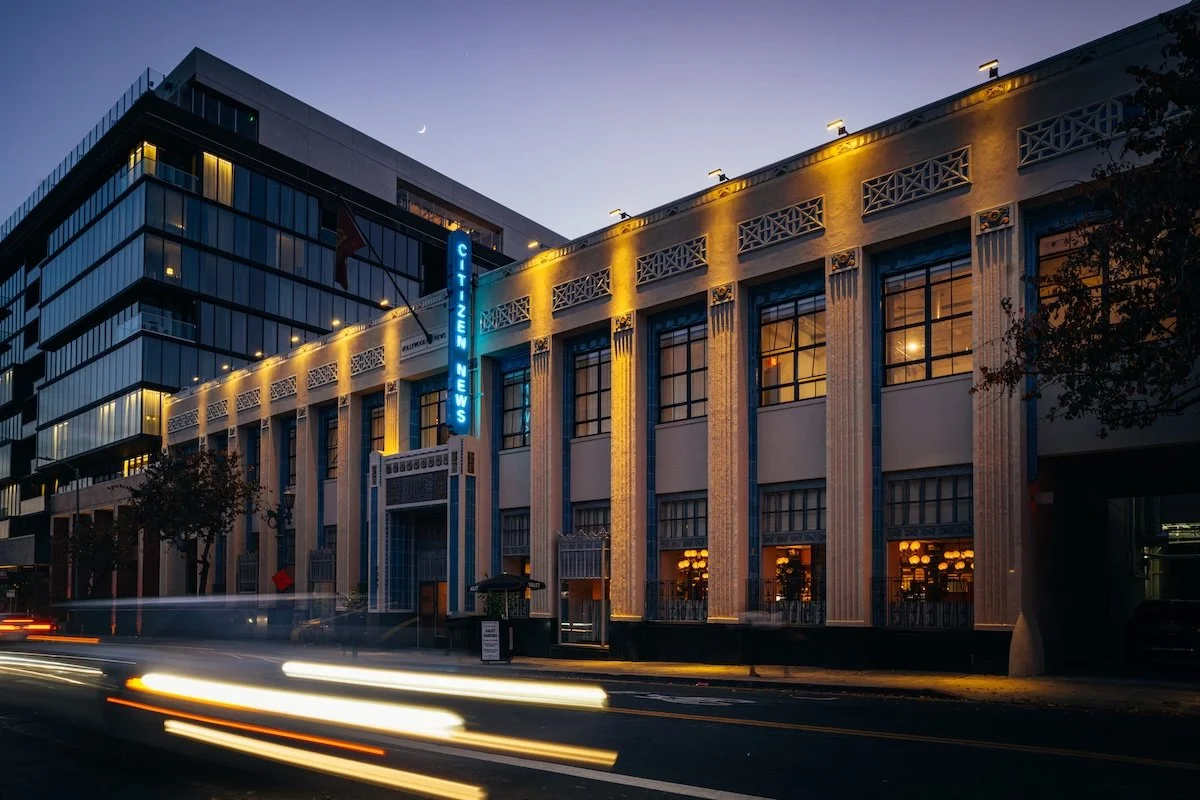
We've got quite a few projects that we're opening next year. The biggest one is Mott 32 which we're opening at the citizen who's building where Mother Wolf is. We're actually opening Mott 32 on the second floor. It's about 11,500 square foot restaurant designed by Joyce Wang. It's going to be stunning. It's really going to a meaningful impact when people walk in and feel very transportive. We're very excited about that. But I'm also equally excited for my partnership with the Good People Group, which is Chef Eyal Shani and Shahar Segal out of Tel Aviv. If I opened the first Miznon, which is kind of our world famous pita shop at Grand Central Market. We're opening two more locations in LA in Q1 and two, and I'm hoping to at least open two more locations by the end of next year. And then the other kind of big thing we're working on is they've got a restaurant brand called Malka, which they have two locations in New York, and they have one in West Palm Beach. They've got one in Tel Aviv. And we're going to open the fifth location in Los Angeles of Chef Eyal Shani's Israeli-Mediterranean kosher concept.
Giancarlo Pagani 35:36
And so there's a massive Jewish community in Los Angeles. A lot of the younger generation, late 20s to kind of mid 30s, are eating more kosher style in the sense and so Eyal Shani created this incredible restaurant concept that caters to that clientele. And it's a restaurant that's not just for kosher eaters. It's meant for everyone. So if you're not kosher, you can enjoy the meal just as you would go into any restaurant that you like, but it happens to be kosher and offer a lot to that community. And so I'm really excited to see that in LA, because there's very few establishments that are Kosher that operate the same way as the great restaurants of Los Angeles. People tend to have the mentality that we're kosher and we don't have a lot of options so I can charge expensive prices for this, and we don't care about service or the look and feel, because you just can't get this anywhere else. Whereas we're saying, No, we're going to build an incredible restaurant that's beautiful and it's fun and it's vibey, and it's chef driven, and it happens to be kosher.
Sam Pepper 36:35
It's crazy that doesn't exist already, to be honest. Like you say it sounds so obvious, and it's like, it's incredible that doesn't exist. You're creating all these, A) you come from this hospitality family of your father was inspiration, and you didn't you. You created Mother Wolf, and you're gonna create these other restaurants that are gonna have this large impact on LA and you're from the city. I am curious, if you think about what your sort of lasting legacy will be on hospitality and restaurants in Los Angeles. Is that something you think about or not really?
Giancarlo Pagani 37:08
Not really. I actually it's funny, because being on a podcast is like the almost contradicted to this. But I like to be behind the scenes.
Sam Pepper 37:18
That's what I say, too. But no one believes it.
Giancarlo Pagani 37:21
Yeah, I enjoy talking about this with with someone like you who's interested in the story of it, in the business, story of it, and, but some restaurant tours, if celebrities are in their restaurant, are always in there, always taking pictures with them, always posting it and, and that's great for their brand. You know, there's people like David Gutman in Miami who's just like the best at that, and it's like self-promoting, and he is becoming a brand. People know his name. I have zero desire to be like that. I want to have great restaurants. I want to keep doing new things. I want to make a healthy living doing this, but I don't need the recognition, and I've had every opportunity to be that person, whether it's we own a nightclub, I could be there every night being like, Hey, I'm Giancarlo Pagani. This is my club. So, you know, I've never wanted to do that, even when I have the opportunity to do that, I'm like, you guys, have fun.
Sam Pepper 38:09
Well, I mean, now you got a three year old, so your focus is different now, right? You gotta focus on family.
Giancarlo Pagani 38:20
Yeah, it's funny, because Evan Funke being this, like, I think he's probably the most sought after chef right now in the country, and he's basically got incredibly strong track record, and he's in his restaurants, but, like, he's not in his restaurants, like, being the Wolfgang Puck and, like, Look at me. Look at me. He's, like, very focused and in his zone, and he doesn't really care about the...it doesn't seem like he cares about the publicity he gets. And he's kind of built this, this personality of being, obviously, very in demand, and everybody wants to be around him, but like, he almost, like, doesn't want it.
Sam Pepper 38:59
Is it fair to say that he, he strikes me as someone who actually, he is interested in promoting the craft of pasta making and sort of the history of it, and he is a vessel to do that, but he's not, like, interested in, like, self promotion, but he is interested in teaching people about, like, the history of this culture.
Giancarlo Pagani 39:19
It seems that way. From my perspective, like, sure, it's fun when your friends get excited about what you're doing, but like, beyond that, like, I don't really care.
Sam Pepper 39:28
Last question, your three favorite places in LA?
Giancarlo Pagani 39:32
For fun, I won't say our restaurants, but the places I get most excited is kind of cheesy, but I'm like, in LA Angelino, like, nostalgic. I love going to Dantanas. I was there on Monday night, by the way, probably one of the best New York steaks in the city, still. I love going to Mr. Chow, and I do love going to Funke.
Sam Pepper 39:50
Nice. Giancarlo, such a pleasure to talk with you. Super excited about what you're doing. Appreciate all the investment you're putting into Los Angeles. So thank you.
Giancarlo Pagani 39:59
Thanks, Sam.
Did you love this episode? Let us know by rating and reviewing our show on Apple Podcasts. It’s easy - simply click this link, click on Listen on Apple Podcasts, scroll to the bottom of the page, and select “Write a Review”. Let us know what you liked best about the episode, and what others can expect when they listen to our show.
While you’re at it, consider subscribing to Building LA. When you subscribe, you can guarantee you never miss a conversation with one our renowned designers, architects, and developers. Subscribe now!