EP.32 / Eric Weatherholtz
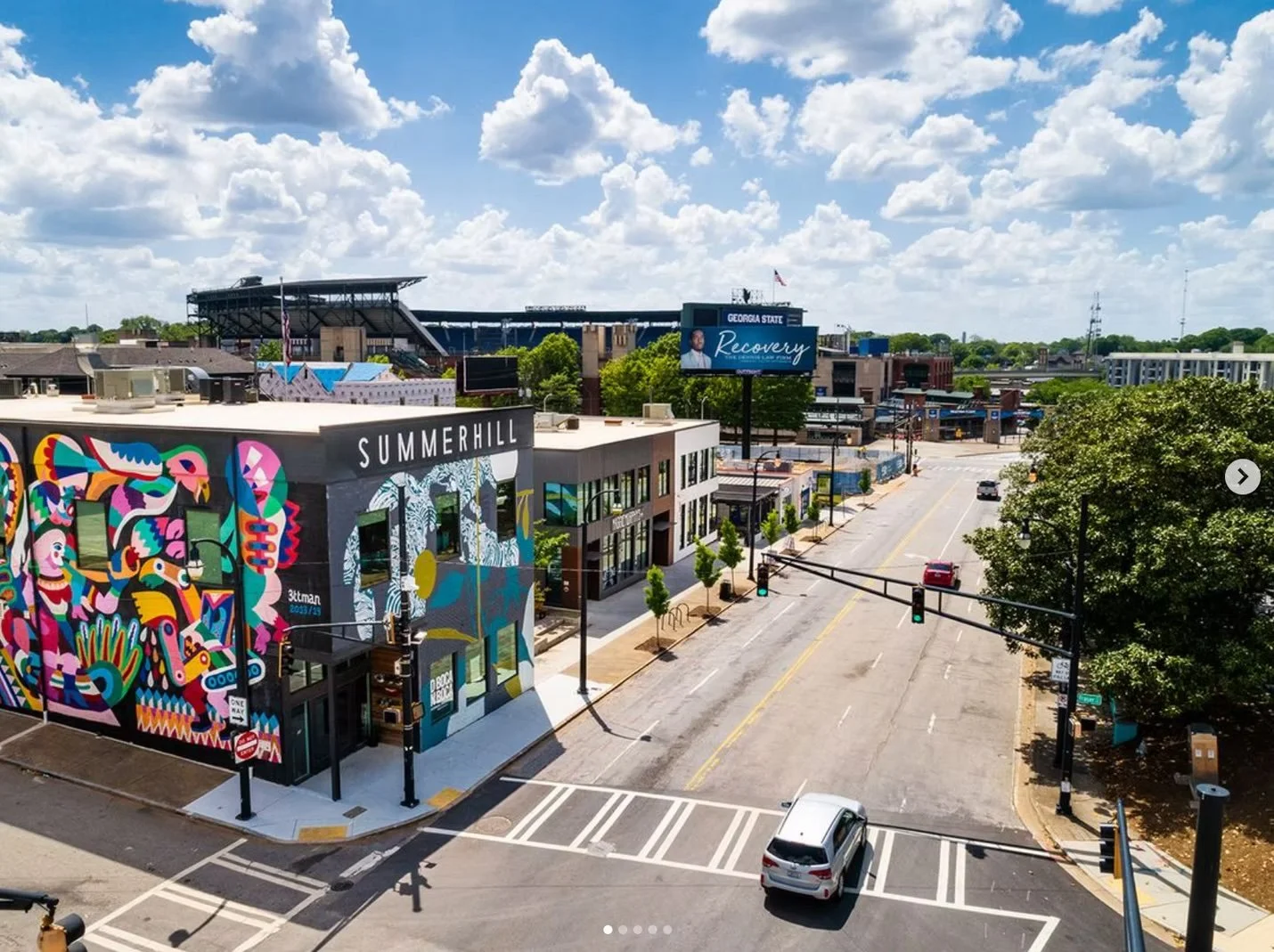
Summerhill, Atlanta
(Source: Healey Weatherholtz Properties)
LA's ‘Vibe Economy’ and a New Strategy for Connecting Hospitality to Capital
Twenty years ago, Eric Weatherholtz closed on a rundown movie theater on Colorado Boulevard in Pasadena, teamed up with CIM Group, and signed a lease with Tiffany & Co..
That single deal flipped the market rent on the entire street within a month and proved to Eric that one exceptional tenant can create exponential value for everyone around it, a philosophy that has shaped everything he's built since.
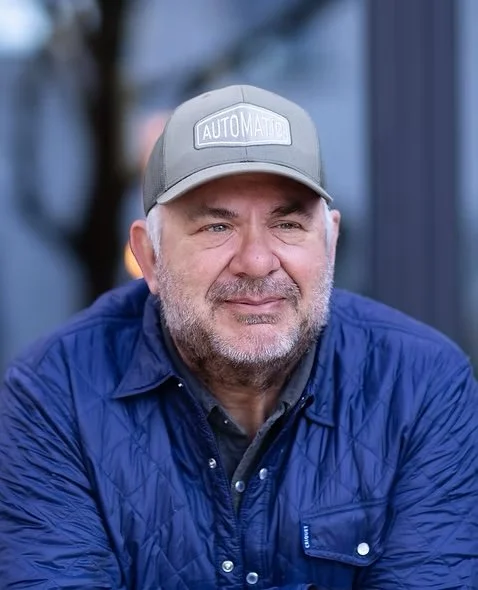
Eric is the co-founder of Healey Weatherholtz Properties and the founder of Automatic, the invitation-only membership connecting the country's best retail and hospitality operators with the developers who can back them. Automatic is making its West Coast debut here in LA at the Maybourne Beverly Hills on September 28 and 29, and Eric joins me to talk through the inspiration behind it.
We get into the six-year transformation of the land around Atlanta's old Braves stadium into Summerhill, which is a case study in revitalizing a local economy. And we close on Los Angeles itself: why Highland Park and Eagle Rock are pulling energy away from the Westside, Eric’s theory that cool is LA’s greatest export, and who we can expect to see at Automatic West Coast.
Listen on Apple Podcasts | Spotify
About Eric Weatherholtz
Eric Weatherholtz is the Founder & Managing Partner of Healy Weatherholtz Properties. He has been involved in the commercial real estate business since 1992, with positions ranging from framing laborer and electrician’s apprentice to leasing agent and asset manager. He became an entrepreneur in 2002 and later co-founded HWP where he has participated with Quill in the repositioning of over thirty commercial properties.
Eric is the author of Asphalt Jungle, a commercial real estate newsletter, and a producer of Real Estate Anonymous.
Topics Covered
First-hand examples of how much value a great retailer impacts neighborhood value
Why 14 restaurant leases, before a single door opened, triggered deals for over 1,700 nearby housing units
The gap between who creates a neighborhood's value and who captures it, and how Automatic aims to close it
The deal that penciled on paper and died anyway: a lesson from the historic San Francisco Metro Theater
Eric's take on why LA remains one of the most desirable places to live in the world
Resources Mentioned
Events
Automatic West Coast — September 28-29 at the Maybourne Beverly Hills
Places
MVW Partners' redevelopment of Miami's Little River
People
Media
-
Sam Pepper 0:00
Eric, welcome to Building LA. We're happy to have you.
Eric Weatherholtz 0:02
Thank you very much, my friend.
Sam Pepper 0:03
So we've been talking for a little while now about Automatic and a conference series that you've set up, which is very different from most conference series that happen in real estate in this country. So we'll get into that and the fact that you are going to be in Los Angeles on September 28 and 29th, which is very very exciting. But before we get to that, I want to get into a little bit about your background, your expertise in development, and so I'm going to start all the way back at the beginning. I don't always do this, but I think with you, I want to. So my understanding is that after graduating, you didn't have a direct path into real estate. You bounced around a little bit before landing on the career and passion that you ended up choosing. So tell us a little bit about the path to real estate, how you got there, because it was a little unusual.
Eric Weatherholtz 0:55
Yeah, I bummed around a little bit, spent some time in the mountains of Colorado, and then actually went to and worked on a ranch in South Texas, the King Ranch, which is one of the most storied places in the country. And I was, of all things, a quail hunting guide on a place that I think at the time was like 750,000 acres, and it was sort of a backhanded introduction to real estate because knowing nothing about nothing, I had a little bit of interaction, very limited interaction, but enough for it to make a really big impression on me. Even though I'm sure it made zero on him, but the owner and steward at the time, and I think I guess still is, was a guy named Tio Kleber, and the thing about the King Ranch that hit me was they had all these revenue streams. They're growing watermelons, and they're running a hunting operation, and they've got oil and gas, and they've got cattle, and they've got solar and horses and all this stuff. And anyway, it was just sort of staggering to me. I mean, it seems obvious now, but like the simply by having your name on a couple of really important pieces of paper, you can end up in a situation where, for doing none of the work, people are are very little of work. People are sending you checks every month. The idea of it was quite fascinating. Unfortunately, didn't have the inheritance to see that happen myself, but it was really eye opening. Just to even though it seems sort of simple, it's it's a pretty unique situation. The way when real estate works, how it works. There's a guy I met, the former chairman of company called Equity One, said that the real estate business sucks for the first 40 years, and then after that, it gets really good.
Sam Pepper 2:42
40 years starting at the age that you that you start in real estate. Okay, that's that bodes poorly for me. Yeah, yeah,
Eric Weatherholtz 2:49
Yeah. But yeah, so that was a unique experience. One in seeing the the wonder of of real estate done right, and then I think you and I talked about it was an interesting time in life because each week you'd spend time with these titans of industry that would come in and out of the ranch, you know, the whatever chairman of Exxon or these big Fortune 100 companies that would come down and spend time. But one of the most interesting things that I think, in retrospect, looking backwards is always sort of 2020. You don't realize the impact of these things. But one of the coolest cats to meet there that I spent ended up spending a really intense amount of time with was this guy named Jim Harrison, who is a writer of note, one of the probably one of the most important American writers of all time, and did some did some screenplays. He wrote Legends of the Fall, which I think people have heard of, but probably best known for his. He was a great writer and an even better eater, as he would tell you. And I wrote a column that was in like Esquire and the New Yorker about wrote a lot about food and it's really wonderful stuff. And then I think Anthony Bourdain, you can probably look him up. Anthony Bourdain did a show about him, but I spent a little bit of time with Jim and just seeing the passion that somebody has about life in general, and also, and sort of, you know, I didn't know anything about food or care anything about food before that. But just sort of hearing somebody that was so involved in that culture, I think planted some seeds that sprouted years later. And then the other thing is, he was a, in some ways, the sort of consummate entrepreneur, and that also planted seeds. And I remember him saying, "There's two paths in life, and it's no harder than this. One is you can do what other people want you to do, or you can do what you want to do. And to the entrepreneur or the the fledgling entrepreneur, there's there's no clear message that you need to hear.
Sam Pepper 4:59
So. Was it a straight path from that conversation to then being a developer in Atlanta, or did you have any sort of traditional, more early roles in a development firm, such as being a financial analyst and property manager, things like that?
Eric Weatherholtz 5:13
Yeah, I ended up with with all the jobs one could have in the real estate business. I started as a property manager, worked in leasing and financial analysis. Worked for some private firms. Worked for some public firms. Did that for about 10 years, kind of bouncing around the country as opportunities presented themselves. And one of the last was before starting a company and becoming an entrepreneur. I was in Phoenix working for a developer there, private developer doing some really large scale projects. And in Phoenix, the office was across from the original Postino Wine Cafe, and there's now I think probably 30 of these, but this is is right around 2000, and out my window I watched the Postino get built, and I've since met the wonderful founder Lauren Bailey, and and told her that she's to blame for what is now Automatic and seeing what she created there. But this was this first Postino, and it had this magical element. It had all the vibes, and if you were, I was like, if you were an attractive person in in in Phoenix, you were required to show up there at 5 o'clock. And she had these incredible happy hours, and it was this bumping place.
Eric Weatherholtz 6:36
And at the same time, I was looking for a house to buy in that neighborhood, and in driving around one day after work, there was a real estate box in front of a for sale house, and I grabbed one of the flyers, and it said "home for sale, three bedrooms, two baths, walking distance to Postino." That sort of hit me that the number one selling point of this house was its proximity to this this fun little neighborhood joint. One hard to say how much more, but it was the most valuable part of the house according to the seller. So, is it $5,000 more valuable? Is it $50,000 more valuable? Hard to say. But the thing that struck me is two things: one, the Postino owner was getting none of that benefit; none of that was really accruing to her. And two, it wasn't just this house that was more valuable, but there were thousands of houses. It's a pretty dense little neighborhood that this halo had the same effect on, and it just sort of planted a seed of the amount of money that was invested in this operation, the impact that that had on the surroundings of you know you take a couple thousand homes at a minimum, and add several to many 1000s of dollars of increased value. That that number adds up. That little mechanism left a lasting imprint and became one of the formative thoughts in in what ended up resulting in what's now Automatic.
Sam Pepper 8:09
That seed of an idea, how did that then translate into the development business that you ended up running with Quill?
Eric Weatherholtz 8:19
It's one of those things that everybody's experienced, but it's also one of those things. Once you see it's it's sort of sort of hard to unsee, and so I guess at the time I was living in Phoenix, and then started this fledgling development company. And actually, one of the first projects to be involved in this is the second or third thing was actually in Los Angeles, and there was a over in Pasadena with another what's now been a longtime partner based in LA. We teamed up, and in a joint venture, bought a old United Artists Theater on Colorado Boulevard in Pasadena, and it sort of this, yeah, it was kind of this outdated, obsolescent building. Even so, this is 2005 ish, 2006. Even then, it was yeah, it was completely obsolescent. It was actually owned by Penny Marshall, who was sort of one of the old guard Hollywood types of Laverne Shirley , it was her estate. Anyway, rents on the street were at that time 30-ish dollars a square foot annually, and we, before closing, were able to. We may have actually signed a lease, or we had gotten close to signing a lease with Tiffany, Tiffany and Company, which was going to be so they were going to take a part of the building, they were going to take the anchor corner, and then we'd add six more shops to it. And interestingly, in that negotiation. We had set the rent at somewhere around market rents, which were you know 30 or $35, something like that, plus a percentage rent. And as the lease was starting to get finalized, we got a call from them saying we think the store will do quite well. What if instead of paying percentage rent, we would pay a higher base rent, which is something that no one really ever hears.
Eric Weatherholtz 8:19
But in our mind, the idea, like with most developer types, was that percentage rent is a is a dream at best. And so, for somebody to say that they would convert that to base rent was music to the ears. So anyway, we ended up their request changing the base rent that was kind of previously agreed to to about twice what it was going to be, but took away the percentage. So to them, it was this huge win because again, you know, us being real estate knuckle draggers had didn't know to the extent at what in their mind sales might be. So to us, it was like, whoa, we just doubled the rent, and to them, they were like, these clowns just agreed to something, you know, far less than we would have ended up paying anyway. So we ended up doing that and teamed up with in a joint venture position with the good folks at CIM Group, who actually did all the heavy lifting and making the bringing the project to life. But so we did the lease with Tiffany, and then there were some other shop spaces, and so now, in our mind, now the new market rent is what they're paying. So it's not 30; it's you know 60 or 70, whatever it was. But instantly, every other rent on the street changed as soon as that came out. Within a month, there was an old Barnes and Noble down the street that was going vacant, and then there was the old Saks Fifth Avenue that was down street. There were a couple of these other things that we were sort of loosely negotiating on, and boom, all the rents changed. Then it sort of got ingrained into how quickly that can happen when the right shock to the system comes into a into a place. So to see the immense and very powerful and very real halo effect. This wasn't something that was like theoretical. This was like real math, and instantaneously, what could happen by the idea of a wonderful new retailer coming to an area, and it's sort of also ingrained in of like how quickly that can happen and the power that a single tenant can have in changing the absolute real value of the surrounding buildings.
Sam Pepper 8:55
Were you a co GP partner with CIM for that deal then? And then they had other properties on that street and in that area.
Eric Weatherholtz 13:00
That was the first project that they had done over that area, but nobody's as good as they are at doing things. If you look at things like West Adams or whatever, oh yeah,
Sam Pepper 13:10
I mean Sycamore. I mean they're they're incredibly good at investing in is more traditional high street style. It actually has a slightly European feel about it, if I'm being honest, where they take a whole street and they make that street a shopping district, which is different from most shopping and commercial nodes in Los Angeles that are more in malls and courtyards and off of the grid, not on the grid. So I like what they do.
Eric Weatherholtz 13:37
Yeah, fantastic.
Sam Pepper 13:38
So obviously the model's working. Your thesis is playing out in real time. You, at this point, have repositioned a number of different projects. You've stewarded a number of developments. In the deals that you're doing now. What are the main ways that you structure your deals today? Are you still doing a co-GP? Are you looking at other towns that you're maybe not so familiar with, as in secondary, tertiary markets, or do you buy into the premise that you know like one area really well and you go really deep in that area, or do you feel like you can kind of spread your efforts around many different cities and and reap the rewards?
Eric Weatherholtz 14:18
Well, you know, my background had been working for various companies and REITs and sort of getting moved all around the country and had worked in, frankly, almost all the major markets in the U.S. to some small extent. And then when I moved back to Atlanta, I partnered with my current business partner Quill Healy, who'd built a very long career. He's a, I think, seventh generation Atlantan, and has done everything that he's ever done in Atlanta, and has a very direct focus on what's happening in Atlanta. So to me, I had a much wider aperture, and I learned a lot of things from him. But one of them was the value of being very intently focused on a small geography and knowing the nuances rather than looking at things with a wide brush.
Eric Weatherholtz 15:16
And I'm, and then I think you know we had have done a number of these retail redevelopments, which has been sort of the specialty of transforming through adaptive reuse and some new development, but transforming oftentimes existing buildings that are, for one reason or another, down on their luck, and then converting them into something that's more vibrant, and one of the things that left probably the biggest impression and gave us the most conviction was a property in Atlanta. We again teamed up and took a minority partnership position with the group that bought Turner Field and the surrounding parking lots, which was the old home of the Atlanta Braves before they moved to the suburbs. And in that process, this is a part of town that was really down on its luck through no fault of their own, but a historic neighborhood that had a interstate built through it, and and was sort of torn apart at the seams, and went from a beautiful and leafy suburb with trolley cars in the 19, you know, up to probably the 1940s to then having a 20 lane interstate through the middle of it, and then 80 acres of asphalt that came with these big sports facilities. So we went into that project with no great ideas, other than thinking it was a big piece of property and a growing, vibrant city, and there ought to be some ways to breathe some life back into it. But over at the edge of the one edge of the property, there were a handful of buildings that had been vacant, old shopfront buildings that had been vacant for 60 years because it was more profitable to park cars on game days than actually have a real tenant there full time.
Sam Pepper 17:20
When this project was happening, the Atlanta Braves still playing there, or they had already moved?
Eric Weatherholtz 17:24
No, no, they had left, and it was a really unique instance where they left. The announcement was made, and they were gone. And it was a quick process with the the city actually owned the property, and they were excited to get it put back into action.
Sam Pepper 17:40
Were the city and were they also investors or in the deal, or did you? I'm assuming there were incentives that the city gave you.
Eric Weatherholtz 17:47
Yes, they were a terrific partner in many respects, but most of it was more, I think, for them of find the right partner to sell it to, and put it in good hands, and do what they can to help, which they've done all the way through. But at the edge of the property, there's this handful of vacant buildings. There's maybe 20,000 square feet of buildings that actually-I mean-they had large trees, 18-inch diameter trees growing through the spaces because they've been vacant so long. So we approached a number of the chefs and and young exciting restaurateurs in and around Atlanta, and said, "What do you think?" And these were the type of people that we had approached over the years with locations in much more affluent. A lot of our business has sort of been in the Century City equivalent of Atlanta, and so calling on the cool kids about that, and them just sort of blowing us off, saying you know that's not for us, and then calling on them about this, and it was to our complete surprise, a couple of these folks said, "Hell yeah, I'm in,." and it was it was surprise to say the least.
Sam Pepper 19:00
So they were pre leasing?
Eric Weatherholtz 19:01
Yeah, I said, well, we said these are for lease, and so we came up with a plan to take these three little blocks, fix up the old buildings, and there was a few missing teeth, and we built some new buildings, and created a little three block walkable stretch of these historic and mixed in with some interesting modern buildings of about the whole thing's 40-ish thousand square feet, and here's the thing: this part of town, you could buy a house, and in fact, an architect at Gensler, who's a friend, bought a house in the neighborhood to fix up. He paid about $80,000 for this house that was bordering what we were doing. Said, I mean, the the L.A. mind can't wrap.
Sam Pepper 19:43
That just makes me angry, to be honest.
Eric Weatherholtz 19:45
That you could buy an actual building with four walls and a roof on actual land, but that $80,000 to $150,000 for a single family home was not ridiculous in the area. So anyway, just to give you a sense of of what it was like, and then these buildings, and to me, it was the most remarkable example of this kind of halo effect that I've been a part of and seen this closely. But we ended up signing leases for 14 restaurants along this little three block stretch, and a handful of retail shops, and when it came out that some of these restaurateurs were opening in this area, it just kind of startled people. Like, wait, those guys are going over there? Incredible! And it created this buzz, and the buzz resulted in a direct thread to making a deal to sell land for 700 student housing units, for another 100 townhomes done by another terrific local developer, then that gave us the conviction to build 320 apartments ourselves, Trammel Crow did another 300. Another developer on an adjoining site did another 300. Almost entirely based on the idea that these people would open. COVID was in there, so these stores had not actually even opened. But the idea that this was going to happen. Just the idea that this was going to happen, and you think about each of those projects as maybe $70, 100 million dollars, and then after that happened, those get open. We sign a lease with the top grocery store in the area, in a place there hadn't been a grocery store in 60 years, and then sign a leases for another 40,000 square feet of retail space at three to 4x the rents where we started on the original little block.
Sam Pepper 21:45
What's the timeline that we're talking about here?
Eric Weatherholtz 21:57
Really quick in real estate terms.
Sam Pepper 22:00
Real estate terms quick? Okay.
Eric Weatherholtz 22:01
So this is I'm not good with dates, but probably about six years.
Sam Pepper 22:05
Yeah, that is quick.
Eric Weatherholtz 22:06
And then subsequently, Kaiser Permanente has come in to build a major facility there. Georgia State University, who'd been a been part of the project from the beginning, has built a new basketball and convocation arena. They've converted the old stadium into their football facility, and they're building a baseball stadium on the side. Anyway, the point of all this is that this is a type of area that this is not West LA. There's a very good case to be made that nothing would have happened at all since then that this area could have just sat fallow, but for the the life brought to it by these passionate retail and restaurant entrepreneurs, and that was the catalyst that set off this thing that has created easily a billion dollars of real estate value. The houses that were that 80 to 150 are now 700 to a million because of the halo effect created by these folks. That you could see it. So this is like it was a very raw and real example of what the entirety of every city has these things, but this is one was that was just the entirety of Silver Lake, the entirety of Brooklyn is based on this thing. But like Silver Lake happened on this thing. But this this is an area where it happened really quickly, and it was like it was like a double blind scientific study because of there weren't any external, very few external factors that influenced it, and you could sort of narrow it down to what was the catalyst in this. Well, it was these 14 independent, passionate restaurateurs that made that.
Sam Pepper 23:52
With those 14 restaurateurs, was there an underlying quality to that area which was cool or interesting that brought that led the first handful, even before you got the rest of the 14? But the first two or three, there must have been something there that they're like, okay, I can see, I can see the vision. Or are you just a very, very good salesman, Eric?
Eric Weatherholtz 24:16
Well, yeah, there are a couple early movers. There's a terrific chef here named Todd Ginsburg, who was a James Beard nominee for Best Chef South. Terrific restaurateur, and his business partner, his family had roots in that specific area, and he saw it, and we're like, he's like, we're, and with that name, it was so uncanny to say Todd Ginsburg's going to this to Georgia Avenue, and the effect was bestia in downtown L.A. Like the things that have happened down there, you could see the compounding knock-on effect of of a single person like that. So he had a ton to do with it, and then. There was quite frankly a couple of other restauranteurs that were at a point of transition. They were trying to get started. They had passion and good ideas and no money, and this was cheap. And so there was a really terrific guys starting a brewery, and they found a home. And then another guy, Justin Sebrew, who didn't have the money. He had a great idea, and he'd been doing pop-up cooking at people's homes, and was creating this great awareness. Could not get open. We tried and helped him find the money to actually get the thing built, and to see this guy who had nothing but passion, grit to create this, get it open, go through COVID, and then get a Michelin award at the end of that has been fantastic to see. So it's like stories like that of these people doing this work day in and day out, it's the passion that they bring to that that creates an energy that makes places more desirable. And it was a, it's been an interesting interesting way to see all that play out.
Sam Pepper 26:16
Okay, well, this is a great segue to Automatic, I think. So, how would you describe Automatic?
Eric Weatherholtz 26:23
Well, so off of the heels of that, and having been involved in projects in lots of different markets, and seeing the effect that certain entrepreneurs can have on an area, and in its most raw form, the what happened at Summerhill at the former Turner Field, my wife and I came up with the idea that wouldn't it be great to identify the people that have that lightning in a bottle and figure out what to do with it? So we made a list of I think 70 people on a yellow pad that we thought had that juice. That if you were to hear so and so is going to this place, it'd make you go whoa, and called on them with the idea. Said we're going to have a party. Will you come? And many of them said sure. And then the word of this party got out to other developers who said we'd love to be a part of that, and this was four years ago, and there was this really electric thing that came out of it. Sort of a was almost like a miniature SXSW, if you will, of these two people who greatly benefit from one another: the emerging retailer and restaurateur, who oftentimes has this, and one selected for their quote halo ability. Oftentimes, these folks don't have the capital or bandwidth or infrastructure to grow. They have the ability to greatly enhance property values. On the other hand, you have property owners that have oftentimes opportunities and capital and are able to help these folks grow. And problem is these two groups don't swim in the same pool, as it were. So the idea behind Automatic was to identify the people that have that power, and create the ability for them to build relationships with the folks that can help them grow, as it were.
Sam Pepper 28:31
Obviously, the LA one is coming up soon, and end of September. How many automatic have you done at this time?
Eric Weatherholtz 28:37
It's evolved, and it's evolved very fast because what we learned is every part of the country has some version of those people. They've got these unique entrepreneurs that are unique to their area, and then they have the types of developers that understand the value that these folks can do. the The idea that a a good coffee shop sells espresso, and a great coffee shop sells hotel rooms and office space and residences. And there are certain people that understand that. So we've seen this evolve into a community of these folks that have self-selected, and it's really some of the most innovative people on all sides of that ecosystem. So retailers, restaurateurs, capital providers, developers. So there's folks from companies like Asana Partners and CIM Group and Related and Hines and some of the top developers, along with people that have concentrated real estate holdings, some interesting family offices, et cetera. Then you have also in that ecosystem where the growth equity providers, the KSL Capitals and the Stripes and the L Cattertons, that are looking for who's sort of that next emerging person.
Eric Weatherholtz 29:59
Design is always an important part of these areas as they emerge. So, some of the top architects and designers in the country, the Morris Agemees and Michael Hsus, have found a great home with an Automatic. And the story is the same; the geography changes. One of the terrific stories that should be studied and emulated, there's a an Automatic member named Matthew Vander Werff in Miami. He's bought 130 individual properties in an area called Little River, which is a neighborhood in Miami, all in separate transactions. These weren't bulk transactions. So making deals on a garbage can lid, you know, and did that over a period of time, and has created one of the most remarkable adaptive reuse redevelopments to bring in you know hospitality and mixed use in the country, and has brought some just amazing hospitality, F and B, to a former warehouse district that is now the byproduct of that is now high rise residential. So to see him create an overlooked and forgotten part of Miami and transform it through grit and perseverance and design and a lot of capital and has made something that's truly remarkable. But there are Matthews around the country. There's people like Steve Ridome in Houston. L.A. got Joseph Miller at Runyon. There's all kinds of people that are doing these types of projects, and they can all cross pollinate too, and that's been another side effect of what's been interesting to see how automatic evolves and to bring new people together from all around the country.
Sam Pepper 31:55
It's super interesting, and a lot of the cities you mentioned have slightly friendlier regulatory environments than LA and California. One of the things that I think is a difference maker for developers in Los Angeles is the ability to navigate the Byzantine approvals processes that we have here, and to have boots on the ground in the room at City Hall, literally at DWP and have know these people by name by face in order to get projects approved because I think a lot of the challenges we face are unfortunately stemming from that and the fact that it is hard to get projects approved, particularly ones that don't include housing. They get sort of passed off into like almost like a second bucket. It's like less of a priority because of all the politics around housing these days. So if you're able to navigate that, then you are able to be successful here. But folks that come from out of town, sometimes into Los Angeles, I think San Francisco is similar, sometimes underestimate how much you do need to know the person behind the counter, in order to get things approved, it can be quite challenging here if you don't know that process.
Eric Weatherholtz 33:07
That reminded me, like we got involved in a project in San Francisco, and LA can do the same. But there was a historic theater, the Metro Theater, one of those great old storefront theaters with the marquee, so we signed a purchase contract to buy the theater. Had a lease. This is 15 years ago, at least, and had a lease signed or negotiated with Sephora to take the building, and it was a perfect solution for this building. The marquee was to remain intact. They were going to incorporate, you know, it had the letter sign type thing out front, and they were going to incorporate that and sort of pay homage to this. So on paper, we were thinking about how much money we had made, and as we were proceeding towards giddily, proceeding towards closing, got a call from somebody that represented some organization called Here to Save the Historic Theater of San Francisco. So, to me, great. Love to talk to you and hear about it because we're not doing anything, even the stages with the curtains, the way they were laying out the store that stayed intact. There's great frescoes on the ceiling that was staying intact. The whole facade stayed intact.
Eric Weatherholtz 34:27
The only thing that was happening was the seats were coming out, some floor leveling was happening, and the new merchandise was going. And to these folks, the answer was absolutely not, not going to happen. And so we had people in the theater industry talk to them and say, "There's no financial model under which this works as a two-screen theater. That this under the current operating regime, there's just no way that this can work." And these people said, "Don't care. We'd rather it be vacant and closed and preserved than anybody'd ever do." And it was not just this group. What we came to find out is there was 22 other neighborhood groups and political groups that were diametrically opposed to this project happening to the naive out-of-towner who thought this was a fantastic solution for bringing new life to an old building that the current owner actually couldn't upkeep and was not going to put any money into, and it was just sort of falling apart.
Sam Pepper 35:26
It's not going to stay as it is. I think that's what people don't understand. It's not. It will fall apart over time.
Eric Weatherholtz 35:31
Yeah, you're not going to cryo vacate so that somebody can then go to it in the future. So anyway, we ended up walking away from what would have been a terrific thing, but it gave me a real taste and appreciation for how amazing it is that in certain markets anything ever gets built, and to continue on in the face of those sorts of long odds, when you have people opposed to you and you have a government that sometimes acts as if it hates hates people in business. It it makes a makes for an incredibly difficult operating environment. That's not lost on me for sure.
Sam Pepper 36:10
No, it does constrict the supply though. So when you are able to build something, generally, if you get to that point where you're in construction, then you're you're doing pretty well. But yeah, getting a project approved in in Los Angeles, especially a large development, really large or small, requires some celebrating. But then, of course, you then need to finance it. So, but yeah, the folks that can do it in Los Angeles and know the system as well are able to build within a market that is one of the strongest in the country, has the most wealth in the country, and has so many different pockets of Los Angeles are still wanting development, and so it's interesting. With your, I don't know the exact sort of Turner Field area in Los Angeles, but I do know that a lot of restauranteurs.
Sam Pepper 36:56
There's there's one in particular. There's a two business partners that own a place called Stir Crazy. It was a coffee shop called Stir Crazy. They made it into a wine bar, kept the name, and it's this tiny little wine bar. You drive past it on a Tuesday evening at 6 o'clock, and you can probably fit 20 people inside, and there are 60 people outside who are looking like they've flown straight from France and Germany, they're all looking cool, smoking cigarettes, drinking wine, and they've been a hot commodity. But they don't want to go west. They have no interest in going to Santa Monica or Venice. They want to go out to Highland Park, Eagle Rock, those areas because that's where sort of the more interesting restaurants popping up, and the sort of that area has become the kind of creative heartbeat of the city, and is where a lot of people are moving to because that's the price point people can actually afford now as successful professionals in in the city. So it's been it's been interesting to see that move in that direction, even though obviously the west side of LA is still seen probably as like the premier area of Los Angeles to live in. So I'm curious your thoughts on Los Angeles. I read your Substack post on it, which I thought was really interesting. You called it the vibe economy, and I was kind of curious what you meant by that with the vibe economy with Los Angeles.
Eric Weatherholtz 38:25
To me, as an outsider, to and it is more it's East Side and West Side, but to be over at the Great White off of Melrose on a Wednesday at 1030 and see it packed with these young attractive people. It's like who's paying these bills? You don't have kids. You're dressed in $500 sweatpants and and some sort of yoga clothes, looking fantastic. And to see an entire city that's based on this sort of esthetic, it's the wellspring of American culture. It still comes from Los Angeles, and it's despite all the people actively working to make it impossible and to shut that economy off. There's this creative aspect and this aesthetic that comes from LA, that then flows into the rest of the world, and it's and it's the weather certainly has something to do with it, but it's just this-it's the best place in America, despite itself, and to see it seems like an entire economy is just absolutely flourishing in these certain pockets, despite itself. Industry leaving, film business closing. Somehow, some way, there's this you know valet's 30 bucks, and the restaurant's full. Everything is. Inspired against some people to operate a restaurant or a retail shop, it's impossible to collect rent if you own an apartment. Yet this is still one of the most desirable places in the country, and it's all based on good vibes.
Sam Pepper 40:16
Look, I think Eric, we're thrilled to have you in Los Angeles in September, and we'll include a link to Automatic meetup, but we're really looking forward to it. And I think the lesson for me here is that I think a lot of Los Angeles needs more of is developers with your mindset. Really, where I actually was having a conversation with someone the other day about this. That in order to create success in LA, you do need to make a big enough investment in an area so that you create enough there there to make it a node that's worth driving to, and people do that. I mean, CIM you mentioned does that in a lot of areas, Platform, and I know those guys are going to the meetup as well. They're these pockets, but you do need to justify why someone should drive 30 minutes to your location, and there has to be more than just one thing to see there, and that requires a little bit of planning, and certainly maybe a larger investment than just one parcel. But if you can make it work, then you then are opening up the entire sort of all the money in Los Angeles potentially flowing to your destination. So it's pretty appealing.
Eric Weatherholtz 41:29
You've got it. That's how it works.
Sam Pepper 41:31
All righty. Well, Eric, really appreciate your time. Great to talk to you as always. Thanks very much for joining the show.
Eric Weatherholtz 41:37
All right, my man. See you in a month.
Did you love this episode? Let us know by rating and reviewing our show on Apple Podcasts. It’s easy - simply click this link, click on Listen on Apple Podcasts, scroll to the bottom of the page, and select “Write a Review”. Let us know what you liked best about the episode, and what others can expect when they listen to our show.
While you’re at it, consider subscribing to Building LA. When you subscribe, you can guarantee you never miss a conversation with one our renowned designers, architects, and developers. Subscribe now!